Article re-cap
- Sandy soil is the dominant soil type across the West Coast corridor, stretching from Bloubergstrand and Melkbosstrand through to Langebaan.
- Coastal gardens in Bloubergstrand face challenges from salt spray and wind that can stifle plant growth.
- Using fast growing shrubs like bush tick berry, blombos, or dune crowberry can create effective windbreaks for your garden.
- Plants such as gazanias, dimorphotheca, ursinias, and Didelta carnosa help stabilise sand and reduce evaporation at the ground level.
- Adding plenty of compost to planting holes is the best way to improve sandy patches without trying to turn them into loam.
When the South-Easter howls through Bloubergstrand, salt spray settles on every leaf and fine sand works into every crevice. Most West Coast gardens fail because they fight this soil instead of working with it.
Why coastal sand defeats most gardens
The wind carries more than just a chill when it blows in from the Atlantic. It brings a fine, biting salt spray that settles on every surface, coating your leaves in a crust that can stifle growth if you are not careful. Along with this salt comes the sand itself, which drifts from the dunes and works its way into every corner of your garden beds.
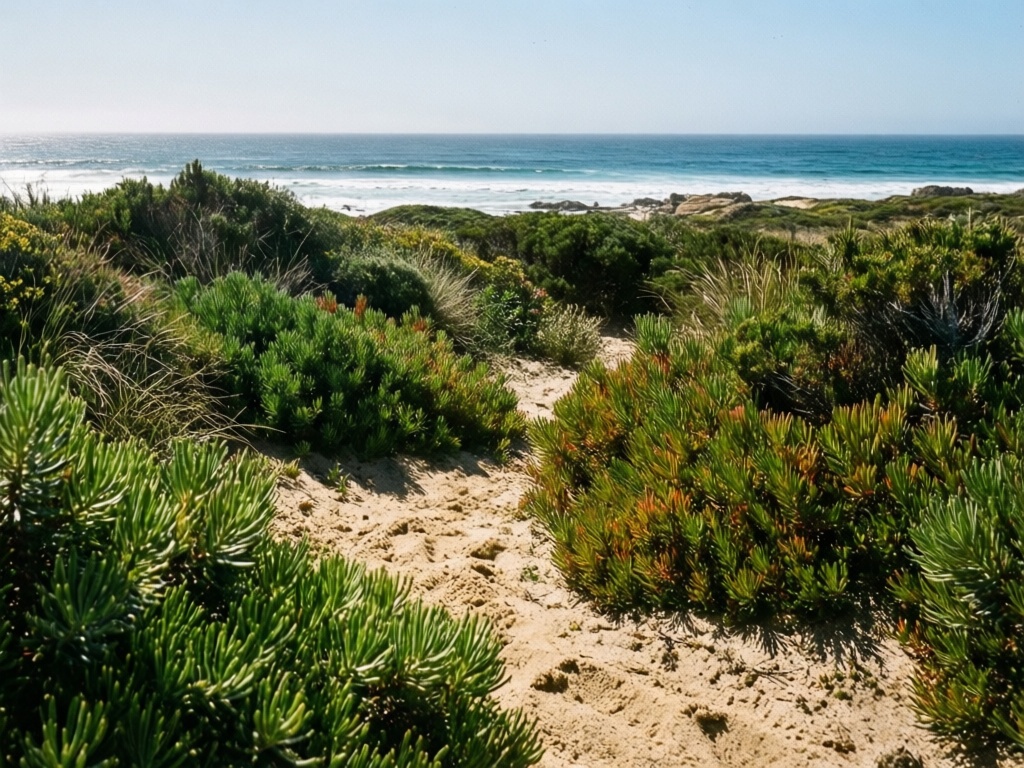
This sandy soil is the dominant type across our corridor, stretching from Bloubergstrand through to Melkbosstrand and up towards Langebaan . While it provides excellent drainage, it lacks the ability to hold onto nutrients or moisture for long. If you try to plant thirsty, ornamental species that require rich, heavy earth, you will find them struggling as the water simply drains away before the roots can take a drink.
The heat of the summer sun only makes this harder by pulling what little moisture remains from the surface. Without a plan to manage this rapid drainage, even the most well-watered garden can quickly become a patch of dry, lifeless sand. You cannot change the nature of the earth here, so you must learn to work with its scarcity rather than fighting against it.
What the sand actually favours
Working with the Strandveld and Fynbos
To garden well on the West Coast, you must stop fighting the soil and start listening to what the coast provides. Most fynbos actually prefers these low-nutrient, well-drained conditions, which makes garden design much easier if you choose the right species .
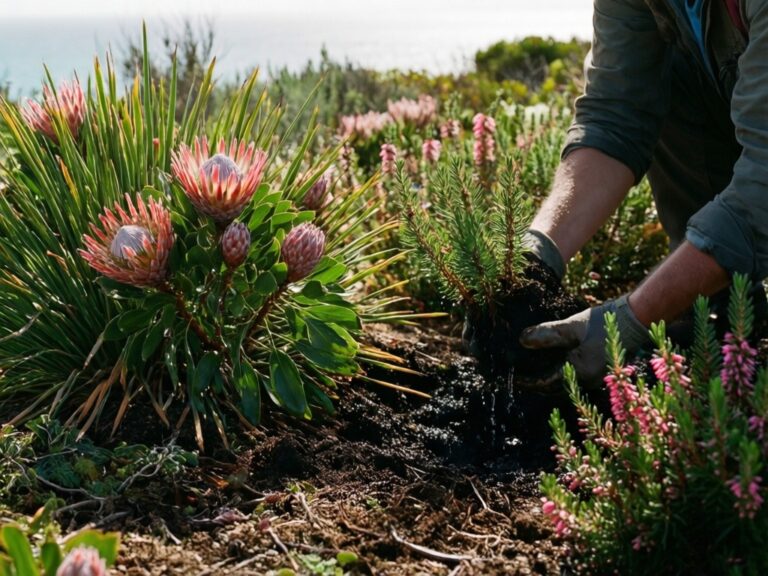
For the areas closer to the coast that fall into the Strandveld category, you should look for plants that prefer a slightly more alkaline soil, as these are naturally adapted to our coastal strip . If you want to improve your patches, do not try to turn them into loam. The best way is simply to put plenty of compost in your planting holes and when preparing a border to give new roots a little help while they settle .
Building protection and cover
To stop the wind from scouring your garden, you can plant fast-growing shrubs like bush tick berry, blombos, or dune crowberry as a windbreak . For the ground level, use members of the daisy family, such as gazanias, dimorphotheca, ursinias, and Didelta carnosa, because they help stabilise the sand and reduce evaporation . You can also use fast-growing groundcovers like sour fig, trailing osteospermum, or carpet geranium to cover the bare earth .
Some plants even have tiny needle-like leaves, such as buchus, coleonemas, or certain ericas, which roll up to stop the sun from stealing their moisture .
Plants built for the West Coast wind and salt
The wind carries a heavy load of salt that can scorch tender stems if they are not prepared for it. To protect your more delicate borders, you must first establish a sturdy perimeter using fast-growing indigenous shrubs that act as a natural shield . These windbreaks take the brunt of the South-Easter so that what lies behind them can thrive.
For the ground layer, look for species that can knit the sand together and keep the moisture from escaping. You might consider using these varieties to cover bare patches:
- Members of the daisy family, such as gazanias, dimorphotheca, ursinias, and Didelta carnosa, which help stabilise the sand .
- Fast-growing groundcovers like sour fig, trailing osteospermum, or carpet geranium .
Some of the most resilient plants here have evolved clever ways to hide their moisture from the sun. You will notice that certain species, such as buchus, coleonemas, or specific ericas, possess tiny needle-like leaves that roll up when the heat arrives . This simple movement is enough to stop the evaporation that would otherwise wither them in our summer heat.
Building a garden that endures
The balance of the garden
Choosing these hardy species means less work and a garden that stays green even when the summer is dry. You avoid the heartbreak of seeing expensive plants die in a single heatwave. However, it does require a different way of thinking; you cannot rely on heavy fertilising, as too much richness can actually harm certain fynbos species.
If you need professional help with layout, tree work, or sourcing local plant varieties, several landscaping and garden-centre services operate along the corridor. These include BEST Landscaping, DC TREE FELLING, and Starke Ayres Home & Garden Centre - West Coast Village - Sunningdale.
For the full picture, read How to plan a low water garden for the Cape Town West Coast.
Frequently asked questions
What are the main challenges of gardening in Bloubergstrand?
Gardening along the West Coast involves managing fine sand and salt spray from the Atlantic. The South Easter wind carries salt that can scorch tender stems, while the sandy soil provides excellent drainage but lacks the ability to hold onto moisture or nutrients for long periods.
Which plants are best for a windbreak in the Blouberg area?
To protect your garden from the wind, you can plant fast growing indigenous shrubs that act as a natural shield. Good options for creating a sturdy perimeter include bush tick berry, blombos, or dune crowberry, which take the brunt of the South Easter.
How can I stop sand from moving in my garden beds?
You can use members of the daisy family, such as gazanias, dimorphotheca, ursinias, and Didelta carnosa, to help stabilise the sand. Additionally, fast growing groundcovers like sour fig, trailing osteospermum, or carpet geranium are excellent for covering bare earth and reducing evaporation.
How should I improve sandy soil in my West Coast garden?
You should not try to change the nature of the earth into loam. Instead, focus on working with the existing conditions by putting plenty of compost in your planting holes and when preparing borders to assist new roots while they settle.
Source: capecontours.co.za, kogelberg-botsoc.co.za, gardenandhome.co.za, iol.co.za