Article re-cap
- Sandy soil dominates the West Coast corridor from Bloubergstrand through to Langebaan, and most fynbos actually thrives in these low-nutrient, well-drained conditions.
- Add plenty of compost to planting holes and borders to help sandy ground retain moisture and nutrients.
- Keep high-water zones such as lawn to no more than ten percent of your total garden area, with the remainder in low-water zones.
- Soaker hoses or drip irrigation deliver water slowly and deeply into the root zone, helping plants establish against the wind.
- Plant fast-growing groundcovers and scrambling plants early to stabilise shifting sand.
- Westringia fruticosa is a reliable choice for exposed spots, tolerating salt spray, wind, and sandy soil with ease.
- Clearing invasive species and preparing the soil well before planting is the most important groundwork you can do.
When the South-Easter howls through Bloubergstrand and sand drifts against your gate, you see what a West Coast garden must truly be made of. A plan that respects salt spray and thirsty soil beats a pretty summer planting every time.
Planning for the wind and the salt
Many people try to force lush, thirsty lawns into places like Melkbosstrand or Table View, only to find themselves fighting a losing battle against the wind and a rising water bill. If you do not work with what the land gives you, the sand will simply blow through your garden until there is nothing left to hold it down.
Working with sandy soil and coastal conditions
Working with the coastal elements
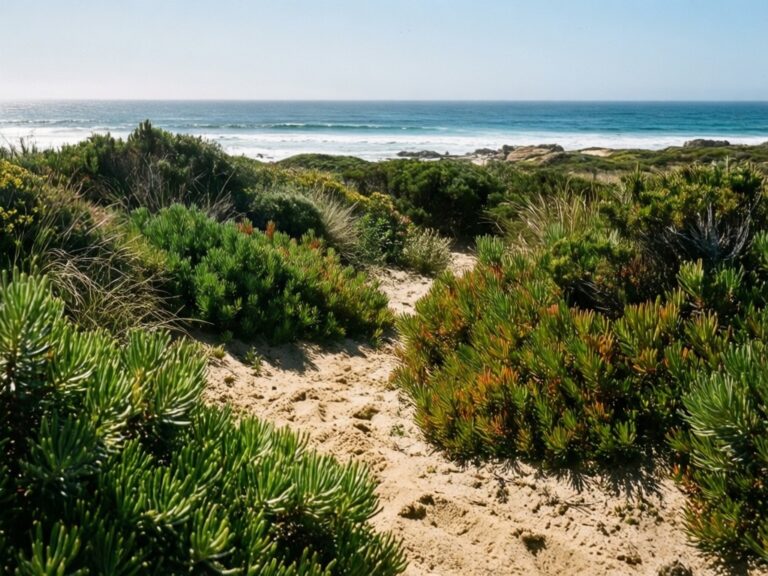
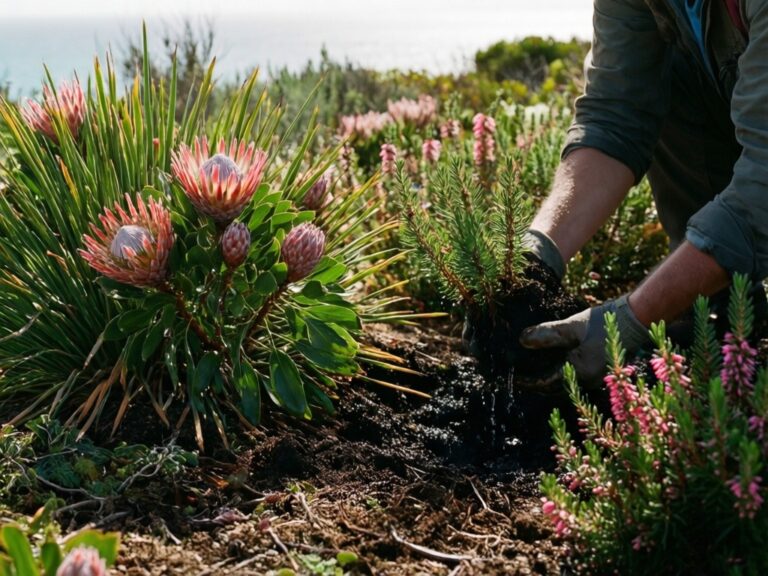
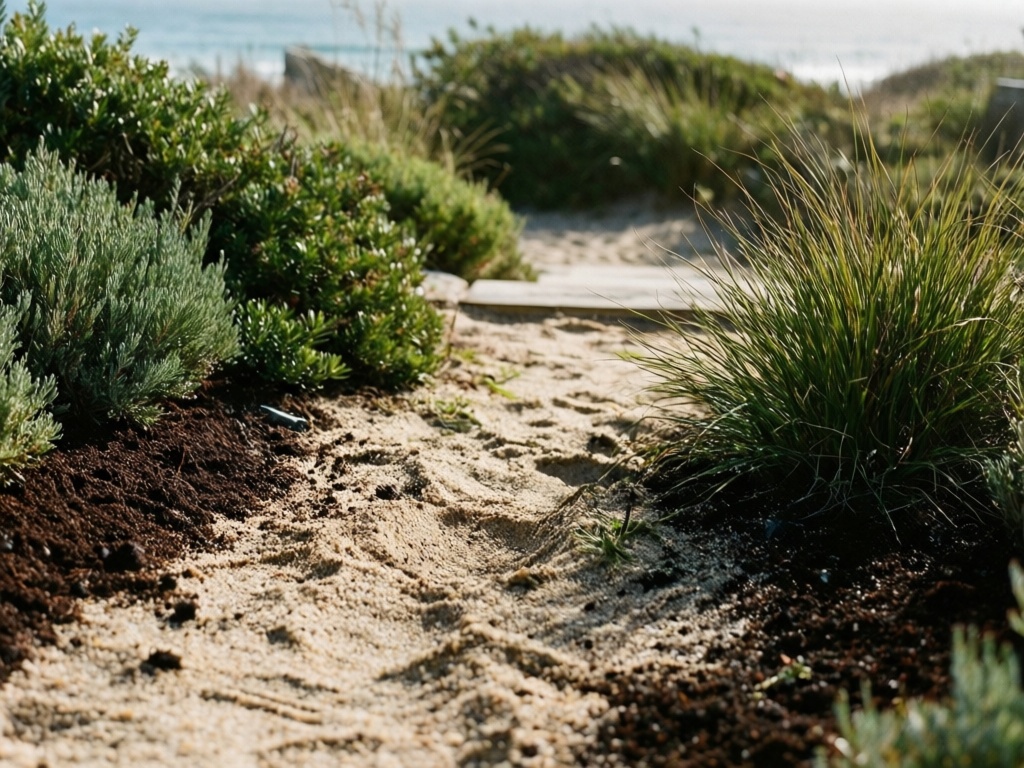
The soil across our West Coast corridor, from Bloubergstrand into Langebaan, is mostly sandy . While this can feel thin and poor, it is actually quite a blessing for certain plants. Most fynbos prefers these low-nutrient, well-drained conditions . To make this work, you must focus on the foundation. The best way to improve sandy soil is to add plenty of compost into your planting holes and borders . This helps the ground hold onto what little moisture arrives.
You should also think about how much water you intend to use. A wise garden keeps high-water zones, like a small patch of lawn, to no more than ten percent of the total area, while the rest remains in low-water zones . For these thirsty areas, using soaker hoses or drip irrigation is a good way to deliver water slowly and deeply into the root zone, which helps the plants establish themselves against the wind . To stop your garden from shifting with the dunes, you must plant fast-growing groundcovers and scrambling plants early on to stabilise the sand . For tougher spots that face the brunt of the salt-laden breezes, Westringia fruticosa is a reliable choice because it handles salt spray and sandy soil with ease .
Choosing a design approach
There are different ways to approach the overall layout of a low-water West Coast garden. You might choose a full indigenous fynbos design, which is low-maintenance once established but requires patience as the plants settle into the sandy soil over their first season or two. Alternatively, a more structured garden using hardy shrubs like Westringia fruticosa for screening and border definition gives you a tidy framework while still meeting the demands of salt spray and coastal winds . A third path combines both: a fynbos understorey with a shrub framework to break the worst of the wind and give the groundcovers time to knit together and stabilise the sand .
Whichever approach you choose, the sequence of work matters. Begin by removing any invasive species that compete for the scarce moisture in sandy soil, then prepare your planting zones with compost before a single new plant goes in. Mark out your high-water zone at the outset, keeping it well within the ten-percent guideline, so that your irrigation planning and any drip infrastructure can be installed before the plants arrive . This order of operations avoids disturbing newly planted groundcovers and gives your design a stable base from the first week.
The main barrier is often the initial work of clearing invasive species and preparing the soil. If you find yourself with trees that have grown too large or are encroaching on your structures due to the coastal winds, a qualified arborist or tree-felling service can help manage the heavy lifting safely; DC TREE FELLING is one local option listed in the Bloubergstrand directory. For those looking to transform a sandy patch into something more permanent, a professional landscaper can assist with the structural design; BEST Landscaping is a local example. When you need supplies like compost or specific coastal plants, Starke Ayres Home & Garden Centre in West Coast Village is a good place to find what the season requires.
Building lasting roots through preparation
The work of a garden is not done in a single afternoon, but in the slow layering of what we put into the earth. When you prepare a planting hole or a new border, the most important thing you can do is add plenty of compost . This gives the sandy ground something to hold onto, creating a small reservoir of nutrients and moisture where there was once only grit.
It is about building a foundation that stays put when the heat arrives. By focusing on deep nutrition and using methods like soaker hoses or drip irrigation, you ensure that water reaches down into the root zone rather than just vanishing off the surface . This slow delivery helps the plants establish themselves firmly before the dry season takes hold.
The wind will always turn, and the summer heat will always arrive to test your preparation. If you have built your garden on deep roots and good compost, you will find that even when the rains are scarce, the green remains.
Frequently asked questions
What type of soil is common across the Bloubergstrand and West Coast area?
Sandy soil is the dominant type across the West Coast corridor, covering areas from Bloubergstrand through Melkbosstrand and into Langebaan. While it can feel thin and poor, it drains well and suits many indigenous plants, particularly fynbos species.
Why does fynbos grow well in the sandy soils of the West Coast?
Most fynbos prefers low-nutrient, well-drained conditions, which is exactly what sandy coastal soil provides. This makes a fynbos-inspired design a naturally practical choice for gardens in Bloubergstrand, Table View, Melkbosstrand, and similar suburbs.
How can I improve sandy soil in my coastal garden?
The best approach is to add plenty of compost to your planting holes and borders. This helps the sandy ground retain moisture and nutrients that would otherwise drain away quickly, giving new plants a better chance to establish.
How much of my garden should I dedicate to high-water-use plants or lawn?
High-water-use zones, such as a small area of lawn, should make up no more than ten percent of your total garden area. The remaining space should be planted with low-water-use species to keep your water use manageable year-round.
What is the best irrigation method for a West Coast coastal garden?
Soaker hoses or drip irrigation systems are ideal because they deliver water slowly and directly into the root zone below the surface. This reduces evaporation and encourages plants to develop deeper, more stable root systems that can withstand coastal winds.
How do I stop sand from shifting through my garden?
Planting fast-growing groundcovers and scrambling plants as early as possible is the most effective way to stabilise shifting sand. These plants bind the soil surface and create a barrier against the wind before it can carry the sand away.
Which plants are well suited to exposed, salty coastal spots?
Westringia fruticosa is a reliable choice for exposed positions. It is highly tolerant of wind, salt spray, and sandy soils, making it suitable for hedging, screening, or low-maintenance borders in coastal suburbs such as Bloubergstrand, West Beach, and Melkbosstrand.
Source: capecontours.co.za, capegardencentre.com, iol.co.za, rcs.co.za, capegardencentre.co.za