Article re-cap
- West Coast salt air, UV, wind and humidity are significantly harsher than conditions in the southern suburbs or inland areas.
- Use flexible acrylic exterior systems with a marine-grade primer and UV-stable colourants for the best protection.
- High-elasticity, UV-stable exterior acrylics are available from most major South African paint brands and are designed to resist wind abrasion and salt.
- Low-sheen finishes on walls and satin on trims outperform gloss in coastal conditions.
- Soft coastal tones such as white, cream, light grey and warm stone are more UV-forgiving than dark colours.
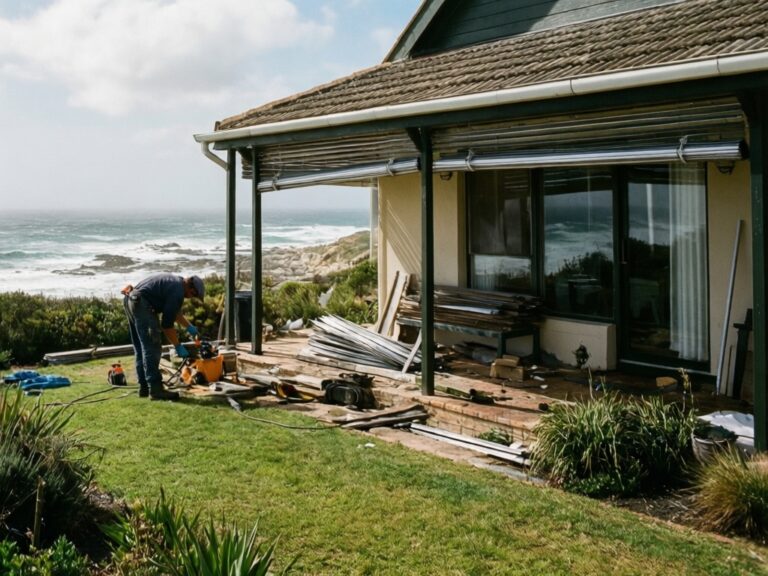
You wake in Melkbosstrand to the sound of wind rattling the frames. The Atlantic looks beautiful until you spot salt crust on your patio furniture and paint peeling from the trims. The West Coast is beautiful and relentless.
What makes West Coast weather so harsh on homes?
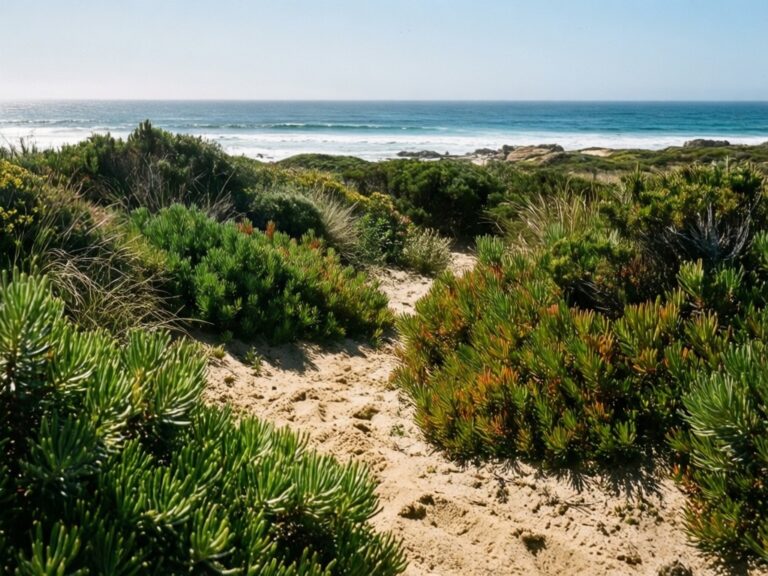
It is easy to forget that while living in paradise, the West Coast weather works quite hard against homes here. The combination of salt air, intense UV rays, and those strong westerly winds means a house in Melkbosstrand, Bloubergstrand or Big Bay faces conditions much harsher than a home tucked away in the southern suburbs or further inland . High humidity plays its part too, adding another layer of pressure on everything from window seals to garden gates.
Which exterior paints and finishes work best?
When choosing materials for a home in places like Bloubergstrand or Table View, the decision cannot rest on what looks appealing in the showroom alone. The material must be able to stand up to the spray.
Choosing the right system
For exterior walls, the right choice is a flexible acrylic exterior system that comes with a marine-grade primer and UV-stable colourants . Rigid systems will eventually crack under the intense sun.
The recommended approach is to look for high-elasticity, UV-stable exterior acrylics available from most major South African paint brands, as these products are designed to move a little with the house and resist wind abrasion and salt spray .
Finishes and sheen
On the walls themselves, low-sheen finishes are best, with satin used for trims. High-gloss finishes may look appealing, but they tend to peel much faster when UV levels are high .
What colours suit a coastal home?
It is worth thinking about your colour palette before committing to a full renovation or a fresh coat of paint. Soft coastal tones like white, cream, light grey, or a warm stone colour work beautifully in this environment because they sit quietly in the landscape and are much more forgiving when the sun is beating down on them .
Darker colours absorb more heat and can fade much quicker under the intense summer sun. Very dark, moody charcoals on Atlantic-facing houses tend to require constant upkeep against the light and heat.
How do you protect outdoor decks?
When building or renovating an outdoor space, especially one that looks out over the water, the choice of wood is critical. Opt for high-quality hardwoods that have been treated with marine-grade finishes. The upfront cost is higher, but these materials resist moisture and warping much better than cheaper alternatives like MDF, which will begin to bend the moment the humidity rolls in .
Lighting and protection
Lighting is also worth careful thought for anyone planning to use the deck at night. On an Atlantic-facing deck, check the rating of all fixtures carefully. An IP65+ rated light is a lifesaver when those winter rains start blowing in sideways .
How often should you maintain the exterior?
Coastal homes require a little more maintenance discipline than those further inland. Plan to inspect your exterior every three years and aim to repaint every four to six years depending on how much wind and salt exposure the surfaces have experienced .
That extra effort saves far bigger headaches down the road. Taking care of the house keeps it performing well for the long term.
Indoor considerations for a coastal home
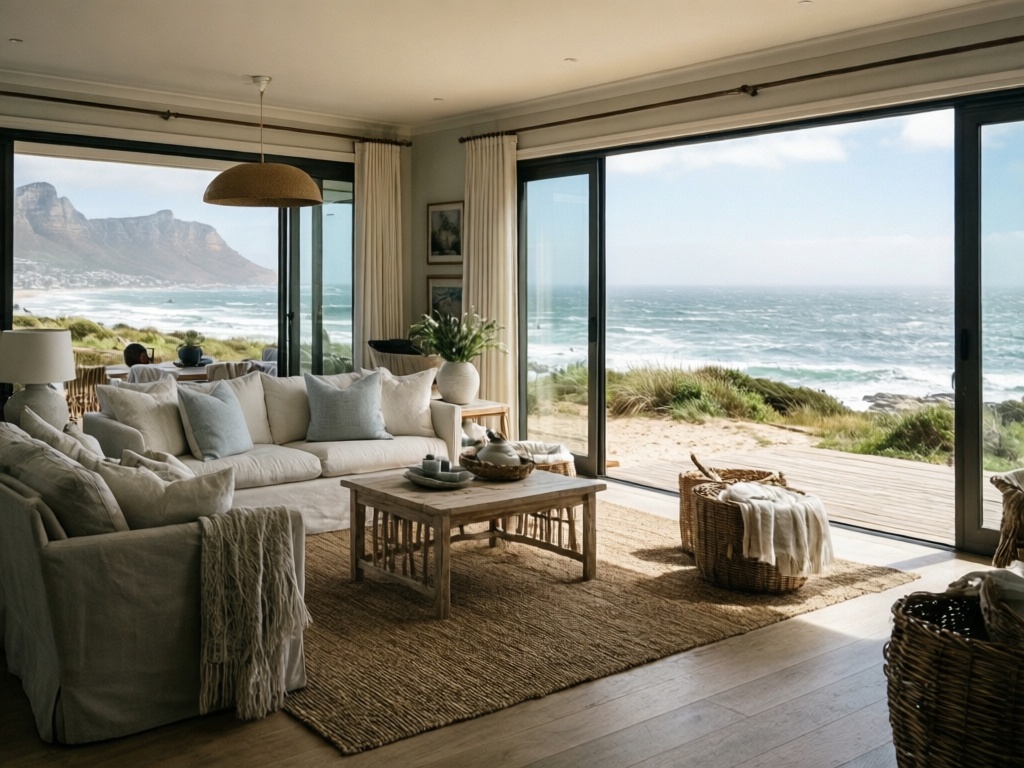
Styling a coastal home well is not only an exterior concern. Salt air, humidity and moisture find their way inside too, and the materials and fittings chosen for the interior need to reflect that reality.
Hardware for windows and doors
Standard steel hardware corrodes quickly in a salt-laden environment. Specify marine-grade stainless steel or powder-coated aluminium for all window and door handles, hinges, locks and stays. This applies throughout homes in Melkbosstrand, Bloubergstrand, Big Bay, Sunset Beach and any other suburb within range of the Atlantic spray. Inspect hardware annually and replace any fittings that show early signs of corrosion before the damage spreads to frames.
Moisture-resistant cabinetry and joinery
MDF and particleboard perform poorly in high-humidity coastal conditions and will swell, delaminate or warp over time . For kitchens, bathrooms and built-in storage, choose solid hardwood, marine-grade plywood or moisture-resistant board products, and ensure all cut edges are sealed. Joinery treated with marine-grade finishes offers the best long-term resistance to warping and moisture penetration.
Ventilation and humidity management
Good ventilation is one of the most effective tools for managing the humidity that builds up inside a coastal home. Ensure bathrooms have extractor fans that vent directly outside, not into roof spaces. In open-plan living areas, cross-ventilation through well-positioned windows helps reduce condensation. Where natural ventilation is limited, a whole-house ventilation system or dehumidifier can help prevent the mould growth and material degradation that persistent indoor humidity causes. Roof spaces and sub-floor cavities should also be checked for adequate airflow during any renovation.
Frequently asked questions
What paint finish is best for a coastal home?
Low-sheen acrylic finishes on exterior walls and satin on trims perform best in coastal conditions. They resist salt and moisture better than gloss finishes, which tend to peel under harsh UV. On the West Coast, a flexible acrylic system with a marine-grade primer and UV-stable colourants is recommended for exterior walls.
How often should I repaint a West Coast home?
In the coastal Melkbosstrand and Bloubergstrand environment, the guidance is to inspect your exterior every three years and repaint every four to six years, depending on the condition of the paintwork and how much wind and salt exposure the surfaces receive.
What IP rating do outdoor lights on the Atlantic coast need?
On an Atlantic-facing deck in areas such as Big Bay, Bloubergstrand or Melkbosstrand, light fittings should be rated IP65 or higher. This rating ensures the fixture is protected against wind-driven rain and salt spray, which are common in winter on the West Coast.
What interior materials are best suited to a coastal home?
For cabinetry and joinery, solid hardwood or marine-grade plywood treated with marine-grade finishes outperforms MDF and particleboard, which swell and delaminate in high-humidity coastal environments. For hardware on windows and doors, marine-grade stainless steel or powder-coated aluminium is the recommended choice.
Source: melkbosstrandpainters.co.za, weatherprufe.co.za, futurelight.co.za, reliancesolidfurniture.co.za