Article re-cap
- Controlled burns are being used within the Greater Cape Town Water Fund catchment to accelerate the removal of invasive pine and eucalyptus trees.
- The removal of invasive species has helped restore over 37 billion litres of water per year into streams that fill regional dams in the area.
- Since its establishment after the 2018 drought, the Greater Cape Town Water Fund has cleared more than 41,000 hectares of invasive trees.
- Strategic controlled burns can help regenerate native fynbos species while reducing the density of invasive plants.
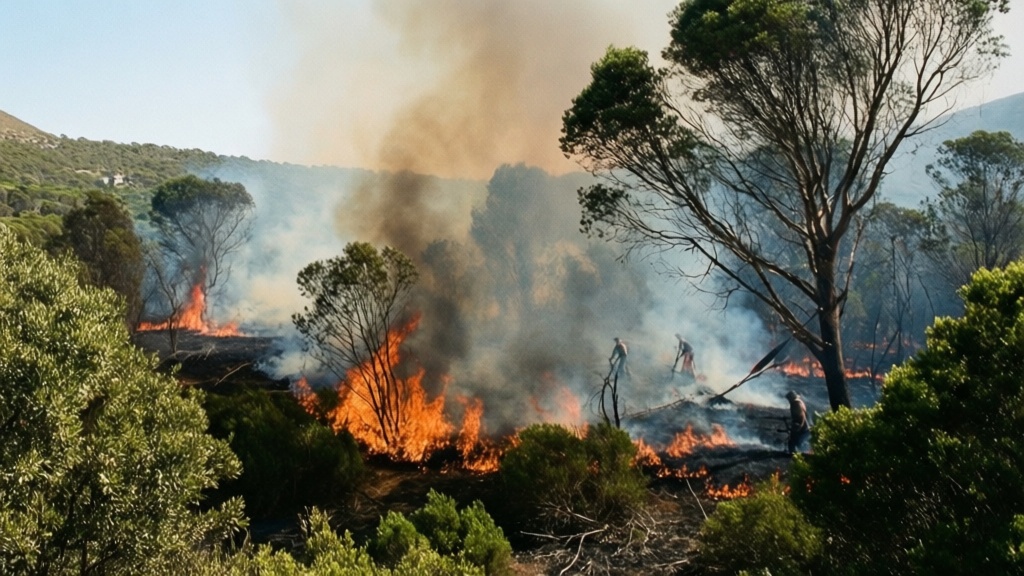
Controlled burns are being used to speed up the removal of invasive trees within the Greater Cape Town Water Fund catchment to protect regional water supplies.
The use of controlled burns is accelerating efforts to clear invasive pine and eucalyptus trees that soak up more water than native vegetation. These invasive species have reduced the amount of water reaching rivers and dams in the region.
Since its establishment following the 2018 drought, the Greater Cape Town Water Fund has removed more than 41,000 hectares of invasive trees throughout the catchment. These efforts have helped restore over 37 billion litres per year into streams that fill regional dams.
A multi-partner coalition including CapeNature, Working on Fire, Fynbos Trust, and Cape Town’s Volunteer Wildfire Services integrated controlled burns as a conservation tool over nearly two years. The initiative also included the Overberg District Municipality and the Greater Overberg Fire Protection Association.
“This is a fire-driven ecosystem,” said Kirsten Watson, who manages the water fund for The Nature Conservancy. “The strategic use of fire through controlled burns and planned follow-up manual treatments doesn’t just reduce invasive plant densities; it can help regenerate native species as well.”
The programme aims to protect the region's native fynbos, which consists of over 9,300 plant species. By clearing invasive trees, The Nature Conservancy science estimated the Water Fund could recover up to two months of its yearly water supply at one tenth the unit cost of desalination or groundwater exploration.
Frequently asked questions
How much water has the Greater Cape Town Water Fund restored so far?
Since its establishment following the 2018 drought, the Greater Cape Town Water Fund has restored over 37 billion litres per year into streams that fill regional dams by removing invasive trees from the catchment.
Why are invasive pine and eucalyptus trees a problem in Cape Town's water catchment?
Invasive pine and eucalyptus trees soak up more water than native vegetation, which has reduced the amount of water reaching rivers and dams in the region. The Greater Cape Town Water Fund has removed more than 41,000 hectares of these invasive species.
How do controlled burns help restore water supplies?
Controlled burns reduce invasive plant densities and help regenerate native fynbos species. A multi-partner coalition has integrated this fire-driven conservation tool as part of a strategic approach that, combined with manual treatments, protects the region's water sources.
How cost-effective is this invasive tree removal compared to other water solutions?
Science estimates the Water Fund could recover up to two months of yearly water supply by clearing invasive trees at one tenth the unit cost of desalination or groundwater exploration.
Source: nature.org