Article re-cap
- Salt crystals from the Atlantic wind settle into the pores of walls and roofs, expanding as they dry to break down surfaces from the inside out.
- Maintaining a coastal home in areas like Table View or Milnerton requires using coastal grade materials that resist high UV radiation and salt air corrosion.
- Applying high quality acrylic paints every four to six years helps protect exterior walls from the damaging effects of salt and wind.
- Regularly checking gutters for debris and inspecting sealants around vents or pipes is essential to prevent water from entering the structure.
You stand on your veranda watching the Cape Doctor blow sand against your windows. That wind carries salt from the Atlantic into every crack in your walls and roof. Ignore the small signs of damage now, and you'll face much bigger repair bills later.
What happens when you ignore small damage?
It starts with something you barely notice, a tiny fissure in the sealant or a bit of grit caught in the gutter. You see it, but you decide it is not worth the trouble today. That is how the damage begins to grow. The wind around Table Bay can act like a sand-blasting machine , and it does not just hit the surface; it works its way inside.
When salt air gets into those small cracks, the crystals settle deep into the pores of your walls and roof . As they dry and expand, they push against the material from the inside out. A little bit of peeling paint is just a warning, but if you leave it, the salt will continue to break down the film until the whole surface is compromised.
The real trouble is when this reaches the structure itself. What looks like a simple maintenance job on a window seal can quickly turn into a much larger issue with dampness or rot once the moisture has found a way through. You cannot expect to maak 'n plan (patch things together) with a bit of putty once the salt and rain have already started eating into the substrate.
What materials and maintenance does a coastal home need?
Keeping the elements out
To keep a house standing in places like Milnerton or Table View, you need more than just luck. You need a proper maintenance routine that follows the SANS 10400 standards for durability . This means using coastal-grade materials specifically chosen to resist high UV radiation and salt air corrosion . For your walls, this usually means applying high-quality acrylic paints every four to six years . If you use cheap paint, the salt crystals will penetrate the surface and break the film apart from the inside .
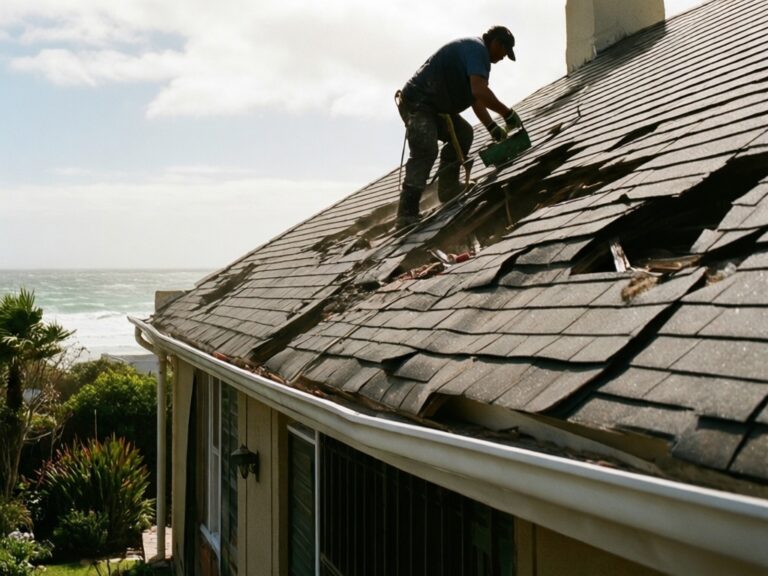
Your roof needs even more attention. You must check that gutters are clear of debris and that sealants around vents or pipes have not dried out and cracked . If water gets under the tiles because a flashing is loose, it will find its way into your ceilings long before you see a puddle on the floor. It is better to regmaak (fix properly) a small leak now than to replace a whole ceiling later.
Seasonal maintenance schedule
A systematic seasonal routine is the most practical way to stay ahead of damage. Before winter sets in, ideally during April and May, work through the following checks. Clear all gutters and downpipes of accumulated debris so that the first heavy rains drain freely . Inspect every sealant joint around windows, doors, vents and roof penetrations and replace any that have cracked or shrunk. Check flashings around chimneys, parapet walls and roof edges for lifting or rust. Look at the paint surface on all exterior walls for chalking, bubbling or peeling, because those are signs that salt crystals have already begun working into the film .
After summer, in October, carry out a second lighter inspection. The dry southeasterly season and the Cape Doctor's abrasive effect can scour paintwork and dislodge pointing or sealant that looked sound in May. Top up any sealants that show early shrinkage, touch up paint where the film has thinned, and clear any fine sand or debris that has settled against base walls, since accumulated material holds moisture against the masonry. Noting the condition of each element at both inspections gives you a year-on-year record that helps you time larger repaint or resealing cycles accurately.
Should you DIY or hire a specialist?
There are two ways to handle this. You can try to do the small checks yourself, which costs nothing but time, or you can call in specialists when the damage looks too deep for a DIY fix.
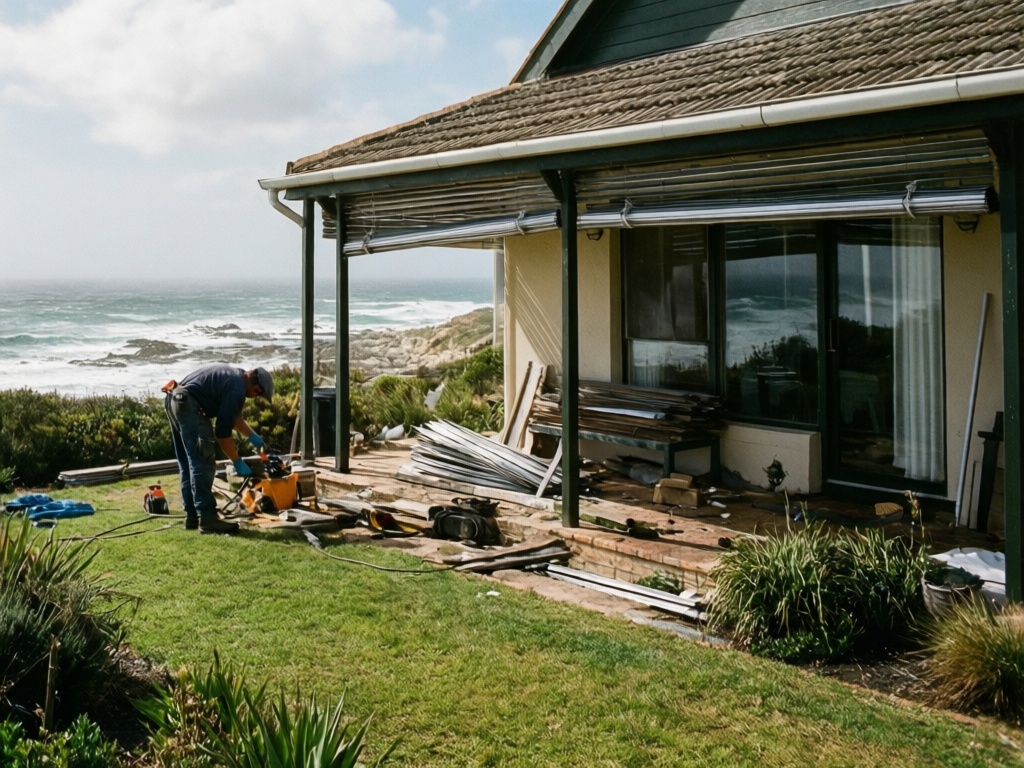
For heavy-duty work like roof restoration or fixing rising damp, you need people who know these local conditions. Homeowners across the northern suburbs and West Coast corridor have a broad range of established specialists to choose from. DAMPPROOFPRO is based in Table View and covers Cape Town and surrounding areas in the Western Cape. Southern Waterproofing in Sunningdale serves a wide footprint that takes in the City Centre, Atlantic Seaboard, Northern Suburbs and lower West Coast. Coastal Painting and Waterproofing in Melkbosstrand handles both exterior painting and waterproofing for coastal properties. Bee Painters and Waterproofers CC in Table View offers combined painting and waterproofing services. DMH Waterproofing in Durbanville brings specialist waterproofing expertise to the northern suburbs, and Aqua Dampproof in Melkbosstrand focuses on damp-proofing solutions suited to the coastal environment.
Homeowners who have attempted to cut costs by using standard hardware store sealants often find that products not rated for coastal conditions are stripped away or degraded within a single season, leaving the underlying substrate exposed to the next weather event. The benefit of hiring a professional is that they use materials designed for this climate , but the barrier is always the upfront cost. It is a hard pill to swallow when you are looking at a quote for a full roof inspection or repainting an entire north-facing wall.
How do you stay ahead of coastal weather damage?
Do not wait for the first heavy winter rain to tell you that your waterproofing has failed. Start by walking around your property after a big wind event and looking for anything that looks disturbed. Check the gutters, look at the window seals, and keep an eye on the paint texture.
Wind speeds of up to 160 km/h have been measured around Table Bay , and the salt those winds carry is always working on every exposed surface. It is much cheaper to maintain a house than it is to rebuild one.
Frequently asked questions
How does the wind in the Bloubergstrand area damage houses?
The wind around Table Bay can act like a sandblasting machine, driving salt and sand into small cracks in walls and roofs. Once inside, salt crystals settle into the pores of materials and expand as they dry, which causes paint to peel and structural damage to occur.
What maintenance is required for the exterior of a coastal home?
To ensure durability in the West Coast climate, you should apply high quality acrylic paints every four to six years. It is also vital to keep gutters clear of debris and ensure that sealants around pipes or vents have not dried out or cracked.
Can I use standard hardware store sealants for my coastal property?
Using standard sealants can be risky because the local wind may strip them off within a single season. It is better to use materials specifically designed for the high UV and salt conditions found in areas like Table View, Milnerton, or Bloubergstrand.
Where can I find waterproofing specialists in the West Coast area?
There are several specialist options available near the Bloubergstrand area, including DAMPPROOFPRO in Table View, Southern Waterproofing in Sunningdale, and Coastal Painting and Waterproofing in Melkbostrand for exterior painting needs.
Source: spxsa.com, capetownmagazine.com, capetowndata.com, weatherprufe.co.za, wilcotecapetown.co.za, prowaterproofing.co.za, construction.capetown