Article re-cap
- Rip currents can pull swimmers out into the bay at speeds reaching up to 2.4 metres per second.
- A rip current often appears as a channel or river like shape flowing away from the backline, sometimes containing sand clouds, seaweed, or debris.
- To survive a rip current, you should stay calm, float on your back to conserve energy, and swim perpendicular to the current at a 90 degree angle.
- Beach flags at Bloubergstrand or Big Bay indicate conditions at the time of placement but do not guarantee that the water will remain safe as tides and winds change.
- Do not enter the surf to rescue someone unless you are trained and have emergency flotation gear like an NSRI Pink Rescue Buoy or a surfboard.
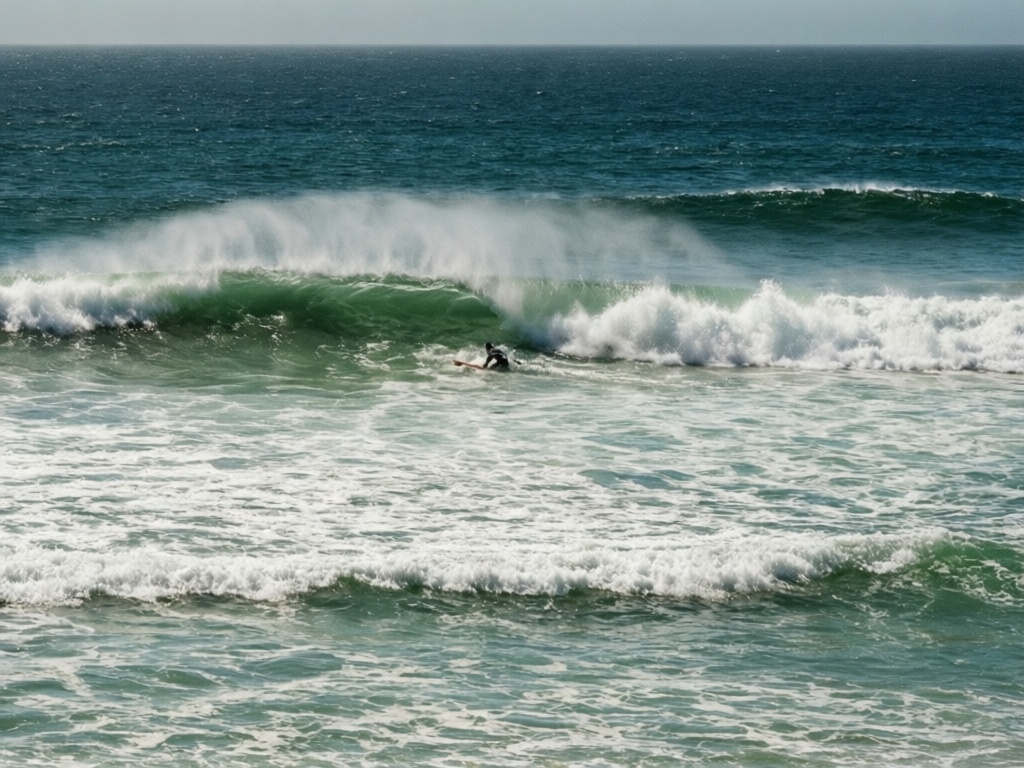
The water looks flat near the shore while the rest of the surf zone breaks hard. This calm patch is often where the danger sits. Rip currents can pull even strong swimmers out into the bay at speeds up to 2.4 metres per second.
What does a rip current look like?
Identifying a rip requires looking for specific signs in the water. A rip current often forms a channel or river-like shape flowing away from the backline. You might see sand clouds, seaweed, or debris being pulled out toward the deeper water.
The surface might look deceptively smooth, but you should also watch for turbulent or choppy water within that same channel. These currents are more likely to form when waves exceed 0.5 metres in height, and they can appear suddenly as flash rips, even when the conditions seem stable.
What should you do if caught in one?
Panic is the first danger in a rip. Fighting the pull uses up energy and drains your strength before you can reach safety. You must follow a specific sequence to stay alive.
- Stay calm and stop struggling against the direction of the flow.
- Float on your back to conserve energy and keep your airway clear.
- Swim perpendicular to the current, at a 90-degree angle, to move out of its path.
The goal is not to reach the shore immediately. The goal is to break free from the channel so the waves can push you back towards the beach.
How do you help someone in trouble?
Helping others requires even more caution. If you see someone struggling in the water, do not enter the surf to reach them unless you are trained and have emergency flotation like an NSRI Pink Rescue Buoy or a surfboard.
Entering the water without the right gear often results in two people needing rescue instead of one. The weight of a panicked person can pull a rescuer under just as easily as a rip current.
Why beach flags do not guarantee safety
The flags at Bloubergstrand or Big Bay tell you what the conditions were when they were placed. They do not tell you what the water will do in an hour. The sea changes with the tide and the wind, often without warning.
A calm morning can turn into a heavy swell as the wind shifts. You might see a flag indicating safe conditions while a rip is already forming further out. Bystanders and lifeguards have repeatedly noted that swimmers ignore visible warning signs, drawn in by a single wave. This is a mistake that costs lives every year in South Africa.
Emergency contacts and next steps
If an emergency occurs, dial 112 from any cell phone or contact the NSRI Emergency Operations Centre directly on 087 094 9774.
For those learning to read these waters for sport, see How to Start Surfing on the Cape Town West Coast.
Respect the movement of the water. The ocean does not negotiate.
Frequently asked questions
How can I identify a rip current in the water?
Look for a channel or river like shape flowing away from the shore. You might notice sand clouds, seaweed, or debris being pulled toward deeper water. While the surface may look deceptively smooth, you should also watch for turbulent or choppy water within that specific channel.
What should I do if I get caught in a rip current?
The most important step is to avoid panicking, as fighting the pull drains your strength. You should stay calm, float on your back to keep your airway clear, and swim at a 90 degree angle perpendicular to the current to break free from the channel.
Are the beach flags at Bloubergstrand always reliable?
Beach flags show what the conditions were when they were placed, but they do not predict future changes. Because the sea changes with the tide and wind, a calm morning can turn into a heavy swell, meaning a rip could form even if a flag indicates safe conditions.
How can I help someone struggling in a rip current?
Do not enter the water to reach a person in trouble unless you are trained and have emergency flotation like a surfboard or an NSRI Pink Rescue Buoy. Entering without gear risks having two people needing rescue, as a panicked person can pull a rescuer under.
Who should I contact during a water emergency in Cape Town?
If an emergency occurs, you can dial 112 from any cell phone. You can also contact the NSRI Emergency Operations Centre directly on 087 094 9774 for assistance with incidents involving rip currents or other ocean emergencies.
Source: nsri.org.za, goodthingsguy.com