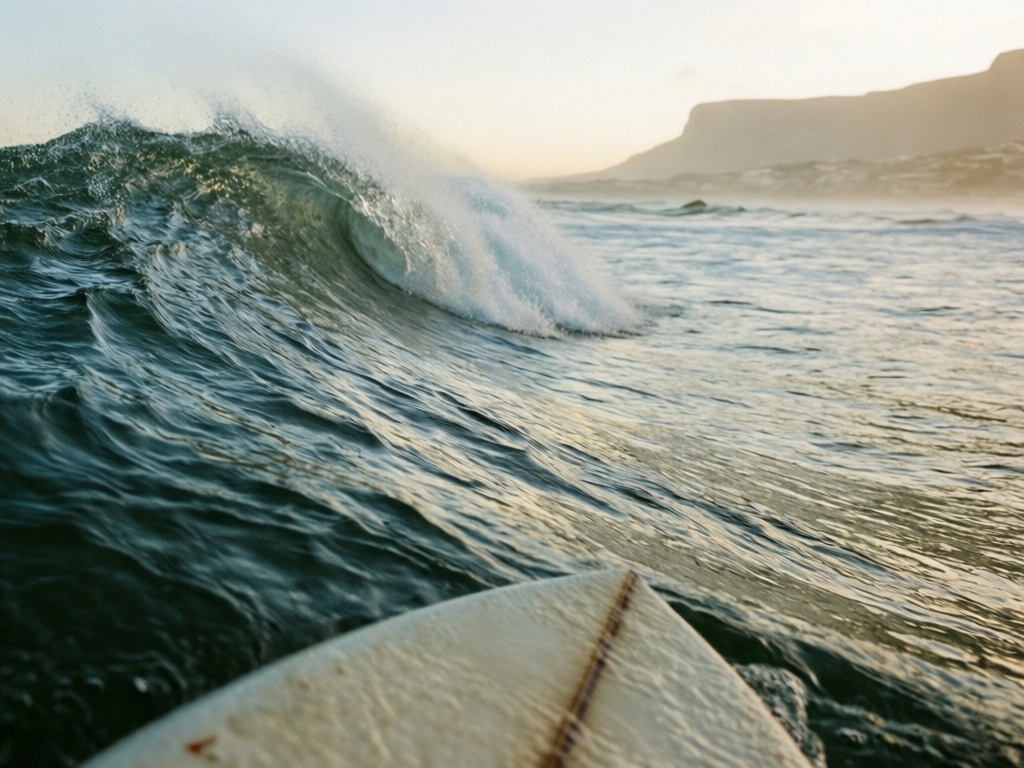
Article re-cap
- An onshore wind creates chop that turns the ocean surface into a washing machine, making even experienced riders struggle.
- The windy season in Cape Town runs from October to March, with strong South to Southeast winds common during these months.
- Offshore winds blow from the land toward the sea and are ideal for smoothing the face of the wave when a swell arrives.
- Atlantic side spots like Bloubergstrand or Big Bay often provide steady winds between 15 and 25 knots.
- If the wind turns North-Westerly, the Atlantic side becomes too rough, requiring surfers to move to Indian Ocean beaches like Muizenberg.
A forecast says light winds, but whitecaps are already forming at Bloubergstrand. You arrive with your gear only to find a heavy South-Easter pushing everything toward the shore. Reading the coast means matching the wind to the right side of the peninsula.
Why wind direction matters before you leave
A heavy South-Easter does not care if your gear is packed or your car is loaded. It simply blows. If you arrive at Bloubergstrand to find the wind pushing hard toward the shore, the session is already compromised. You cannot fight an onshore wind with better technique.
The cost of ignoring the direction is a wasted trip and a messy ocean. An onshore wind creates chop that makes even experienced riders struggle. It turns the surface into a washing machine. To find clean water, you must match the wind to the right side of the peninsula.
Wind direction determines whether the ocean surface is clean or chaotic, and getting that wrong before you leave costs you the whole session.
When is the West Coast windy and what speeds can you expect?
The windy season runs from October to March. During these months, Cape Town experiences strong South to Southeast winds. In the high season, these gusts can reach 25 to 45 knots.
Wind direction and water quality
To find rideable water, you must look at where the wind hits the land. An offshore wind blows from the land toward the sea. This smooths the face of the wave.
An onshore wind blows from the sea toward the land. This creates chop and messy waves. If the wind turns North-Westerly, the Atlantic side becomes too rough and you move to Indian Ocean beaches like Muizenberg instead.
Which side of the peninsula should you choose?
The Atlantic side
A South-Easter requires you to head toward the Atlantic side of the peninsula. Spots like Bloubergstrand or Big Bay often provide steady winds between 15 and 25 knots. These locations rely on specific swell directions to work well.
For surfing, the ideal swell comes from the Southwest. At The Point, offshore winds come from the Southeast to clean up the waves. Further north, Yzerfontein needs East to Southeast offshore winds and a West Southwest swell. This area is often best in the winter months like June.
The Indian Ocean and Lagoon
If the wind turns North-Westerly, the Atlantic side becomes too rough. You move to Indian Ocean beaches like Muizenberg instead.
Langebaan lagoon offers a different use case. For beginners, the lagoon provides reliable afternoon breezes between October and March. It is a sheltered environment where the wind does not overpower the learner.
What are the trade-offs between locations?
Every spot on this coast works differently depending on what you need from the water. You cannot have everything at once.
The choice usually comes down to three specific factors:
- Atlantic side spots offer reliable wind but can become heavy and dangerous during high season.
- Lagoon sessions are safer for learning but lack the power of the open ocean.
- Indian Ocean sides provide relief from the South-Easter but require different timing.
The wind does not care if you are a beginner or an expert. It only blows. You must decide if you want the stability of the lagoon or the raw energy of the Atlantic.
How do you learn to read these patterns?
Learning to read these patterns is a slow process. You will misread the charts at first. You will drive to Melkbosstrand or Table View only to find the conditions are unusable.
This is part of the trade. Some days you pack the car for a heavy swell and arrive to find the wind has turned the beach into a washing machine. The gear is ready but the ocean is not.
Two habits will sharpen your reading faster than anything else. First, check the wind direction on a forecast app before you load the car: the direction matters more than the speed, because an onshore wind at 15 knots ruins a session that an offshore wind at 20 knots would make excellent. Second, if you can already see whitecaps from the car park when you arrive, those whitecaps are telling you the wind is onshore and the surface will be choppy. You do not need to unpack to confirm it.
For those just starting, you should read How to Start Surfing on the Cape Town West Coast.
Watch the horizon and check the direction before you unpack. The wind does not change for your schedule.
Frequently asked questions
When is the best time to kitesurf on the West Coast?
The windy season on the West Coast runs from October to March. During these months, Cape Town experiences strong South to Southeast winds, with gusts in the high season reaching 25 to 45 knots. Langebaan lagoon also enjoys reliable afternoon breezes throughout this period, making it particularly suitable for learners.
Which side of the peninsula should I surf when the South-Easter is blowing?
When the South-Easter is blowing, head to the Atlantic side of the peninsula. Spots such as Bloubergstrand and Big Bay benefit from these conditions, with steady winds and, on the right day, clean offshore conditions. If the wind turns North-Westerly instead, move to Indian Ocean beaches like Muizenberg, which offer more sheltered water.
Is Langebaan lagoon suitable for beginner kitesurfers?
Yes. Langebaan lagoon is a sheltered environment that provides reliable afternoon breezes between October and March. Because the wind does not overpower the learner and the water is calmer than the open ocean, it is widely regarded as a good starting point for those new to kitesurfing.
Source: ikointl.com, utopiaholidays.co.za, freeridekitesurf.com, surf-forecast.com, rentacheapie.co.za, southafrica.net, thefarmhousehotel.com