Article re-cap
- The wind in the Bloubergstrand area typically builds around 10 am and blows between 20 and 40 knots approximately five days per week.
- Kitesurfing winds along the Bloubergstrand, Dolphin Beach, and Sunset Beach coast are characteristically side-onshore, which helps prevent learners from being blown too far out to sea.
- Learners on the West Coast should prepare for water temperatures between 18 and 21°C by using a 4/3mm wetsuit.
- To ensure professional safety standards, you should verify that your kitesurfing instructor or school is recognised by the South African Kitesurfing Association (SAKA).
- Equipment rentals in Cape Town are generally reserved for advanced riders who have reached IKO Level 3J or higher and can ride consistently upwind.
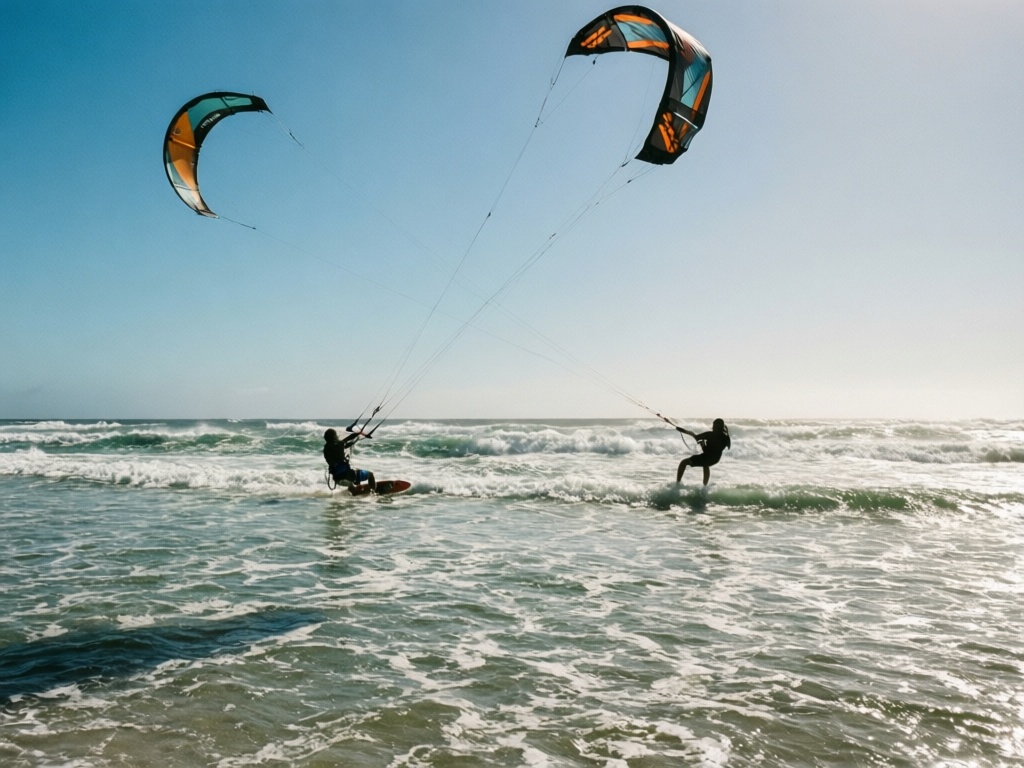
A kite snaps taut in the wind at Bloubergstrand. Learning to ride demands more than watching-it requires understanding the local wind patterns, safety standards, and progression benchmarks that define this coast.
When and where the wind works
The wind in this region follows a reliable schedule. It typically begins to build lightly around 10 am and increases consistently throughout the day, blowing approximately five days per week at speeds between 20 and 40 knots [[cite:1]]. Because these winds are characteristically side-onshore, they provide a manageable environment for learners by preventing you from being blown too far out to sea [[cite:2]].
Bloubergstrand, Dolphin Beach, and Sunset Beach all share similar kiteboarding conditions [[cite:3]]. While the wind characteristics remain consistent across this stretch of coast, the water temperature is a constant factor that dictates your gear requirements. Temperatures generally range between 18 and 21°C [[cite:7]]. For most learners, a 4/3mm wetsuit is the standard requirement to manage this chill, though those more sensitive to cold may need heavier protection [[cite:7]].
What credentials matter?
Safety in kitesurfing is built on verifiable credentials rather than verbal assurances. When selecting a school or instructor, there are two specific layers of verification required to ensure the training meets professional standards.
The first layer involves checking the local professional standing of the coach. You should verify that your instructor or school is recognised by the South African Kitesurfing Association (SAKA). SAKA provides a mechanism to double-check the credentials of a specific instructor or kitesurfing school [[cite:5]].
The second layer involves international certification, which standardises your skills for use outside of the local region. Look for training that leads to an IKO (International Kiteboarding Organization) certification. The following two benefits define this standard:
- An IKO Member Card acts as a global passport, recognised and acknowledged worldwide [[cite:4]].
- This card allows you to rent equipment and enrol in advanced courses in other locations [[cite:4]].
Failure to verify these credentials creates a significant risk. An unaccredited instructor may lack training in emergency marine procedures or the specific beach bylaws governing launch zones, leaving both the student and the local community at risk.
How progression works
The progression path
Learning is a tiered process of skill acquisition. While the minimum age to begin learning is 12 years old [[cite:8]], the transition from student to independent rider involves specific benchmarks. For those moving from other disciplines, such as
How to Start Surfing on the Cape Town West Coast, the shift requires mastering wind management rather than just wave timing. There is a notable distinction between learning and advanced riding. While beginners focus on basic control, equipment rentals in Cape Town are generally reserved for advanced riders who have reached IKO Level 3J or higher, demonstrating the ability to ride consistently upwind [[cite:6]]. It is worth noting that the jump from basic kite control to consistent upwind riding is often where most learners face their greatest technical hurdle. The progression relies on a stable foundation of wind knowledge and certified instruction. Once the mechanics of the wind and the requirements of the IKO standards are understood, the focus shifts naturally toward refining technique and increasing riding duration.
Frequently asked questions
What is the best time of day to go kitesurfing in Bloubergstrand?
The wind in this region follows a reliable schedule, typically beginning to build lightly around 10 am. It increases consistently throughout the day and blows at speeds between 20 and 40 knots about five days per week, providing excellent conditions for learners along the West Coast.
What kind of wetsuit do I need for kitesurfing in Blouberg?
Because water temperatures along the Bloubergstrand and Sunset Beach stretch generally range between 18 and 21°C, a 4/3mm wetsuit is the standard requirement. However, individuals who are more sensitive to the cold may need heavier protection to manage the chill effectively.
How can I tell if a kitesurfing instructor in Cape Town is qualified?
You should check for two layers of verification. First, ensure the instructor or school is recognised by the South African Kitesurfing Association (SAKA). Second, look for training that leads to an International Kiteboarding Organization (IKO) certification, which provides a globally recognised member card.
At what age can someone start learning kitesurfing?
The minimum age to begin learning the sport of kitesurfing is 12 years old. Progression involves a tiered process of skill acquisition, moving from basic kite control toward mastering wind management and eventually achieving the ability to ride consistently upwind.
Can I rent kitesurfing equipment in Cape Town as a beginner?
Equipment rentals in Cape Town are generally reserved for advanced riders. To qualify, you typically need to have reached IKO Level 3J or higher, demonstrating that you have the technical ability to ride consistently upwind rather than just focusing on basic kite control.
Source: iksurfmag.com, mysticboarding.com, kiteguide.com, sakitesurf.co.za, secretcapetown.co.za, high-five.co.za, locations.thekitespot.com