Article re-cap
- An eye exam is a clinical screening that can detect systemic health issues such as glaucoma and diabetic retinopathy.
- Children should have their first clinical eye examination as early as six months of age to monitor developmental milestones.
- Adults between the ages of 40 and 64 should undergo annual testing to screen for presbyopia and other age related changes.
- To ensure professional standards, you must verify that an optometrist is registered with the Health Professions Council of South Africa.
- Basic eye tests in South Africa generally range from R200 to R450 when paying out of pocket.
You sit in the waiting room wondering if this appointment is necessary. The truth: an eye exam is a clinical screening that catches systemic health issues like glaucoma and diabetic retinopathy before they cause irreversible damage.
What an eye test actually screens for
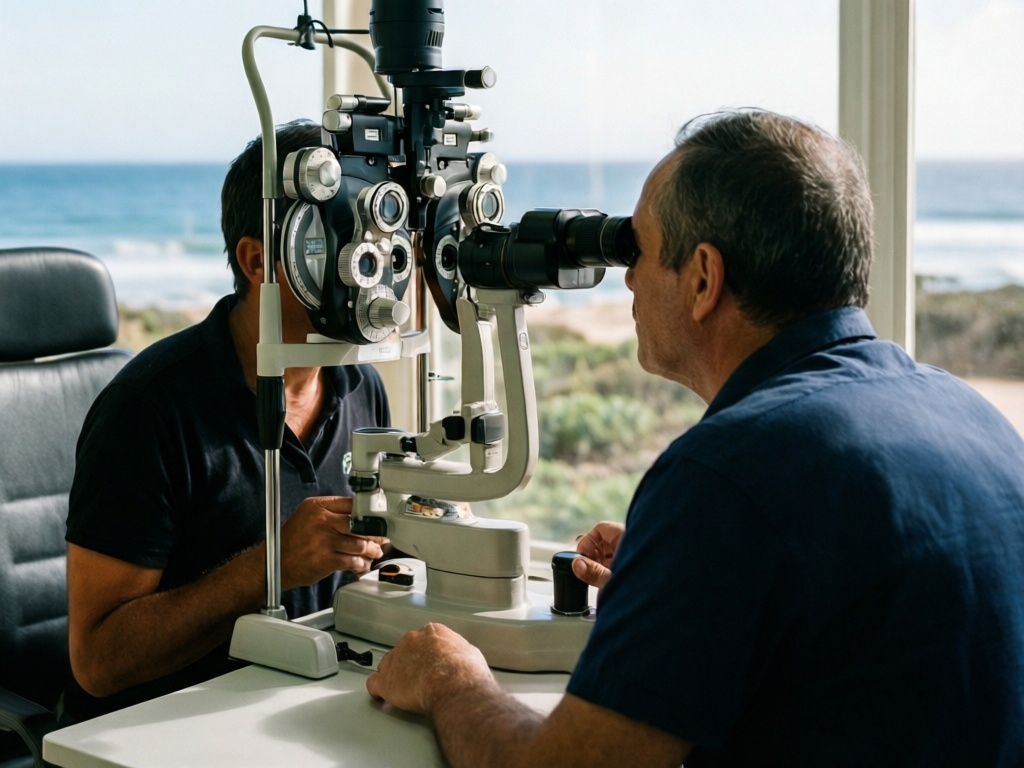
A standard eye exam in South Africa typically lasts between 30 to 45 minutes. This time is used for much more than reading letters on a wall chart, as the process involves a clinical assessment of your ocular health. The optometrist uses this window to look for signs of cataracts, macular degeneration, and glaucoma, alongside checking for hypertension or diabetic retinopathy.
The frequency of these checks depends entirely on your age and medical history. For children, the first examination should occur as early as six months of age to monitor developmental milestones. Once you reach the 40 to 64 age bracket, annual testing becomes the standard to screen for presbyopia and other age-related changes.
How often should you have an eye test?
Early detection for children
Eye care is not a reactive measure to be started once vision begins to blur. For infants, the first clinical screening should occur as early as six months of age to ensure that developmental milestones are being met correctly.
Waiting until a child complains of blurry vision often means missing the window for early intervention. Establishing this baseline during infancy allows practitioners to monitor ocular development alongside physical growth.
Maintenance for adults
As you move into your middle years, the frequency of testing must increase to account for physiological shifts. For adults between the ages of 40 and 64, annual testing is the professional standard to screen for presbyopia and other age-related changes.
These yearly checks are necessary because many ocular conditions do not present obvious symptoms in their early stages. Regular appointments ensure that shifts in near-vision focus or the onset of age-related complications are caught during routine screenings.
How to choose a registered optometrist
Finding a practitioner in Parklands or Milnerton requires more than just checking proximity to your home. You must verify that the optometrist is registered with the Health Professions Council of South Africa (HPCSA), as this registration is the only way to ensure the professional is legally permitted to practice. Without this, you have no guarantee of clinical standards or legal accountability.
If you use contact lenses, do not assume a quick prescription update is possible at any time. You cannot simply pick up a new supply without an ocular health evaluation if your last consultation was more than a year ago.
Readers in the Table View, Parklands, Milnerton and Blouberg corridor can use the HPCSA's online practitioner register, which is searchable by suburb, to confirm that any optometrist they are considering holds a current, valid registration before booking.
Contact lens users: renewal rules and timing
Ordering a new supply of contact lenses is not a simple retail transaction that you can complete at your convenience. If your last clinical consultation took place more than a year ago, the practitioner cannot legally hand over new lenses without performing a fresh ocular health evaluation.
This requirement exists because lens fit and corneal health change over time, making an outdated prescription potentially unsafe for your eyes. You should plan your appointment well before your current supply runs out to avoid being stuck with an expired prescription that prevents a refill.
Eye test costs and medical aid claims
Budgeting for a consultation requires looking at two different payment paths. If you choose to pay out-of-pocket, basic eye tests in South Africa generally range from R200 to R450 depending on the specific practice and location. This price covers the clinical assessment but does not include the cost of corrective hardware like frames or lenses.
Navigating medical aid is more complex because most schemes operate on a 24-month benefit cycle, though the exact rules for your specific plan will vary. The real administrative headache usually lies in the timing of these claims rather than the cost of the exam itself. If you attempt to claim for new frames too soon after a previous claim, the rejection will cost you more time than the actual test ever would.
Before you book, check your medical aid's specific benefit year and ensure your chosen optometrist is in-network to avoid unexpected gaps in coverage. Check your medical aid's optical benefit reset date before scheduling any major hardware purchases.
Frequently asked questions
How often should I have an eye test?
The frequency depends on your age and medical history. For infants, the first screening should occur at six months of age. For adults in the 40 to 64 age bracket, annual testing is the professional standard to monitor for presby and other age related changes.
How can I find a legitimate optometrist in the Blouberg or Milnerton area?
When looking for a practitioner in Parklands, Milnerton, or the greater Bloubergstrand area, you must verify that they are registered with the Health Professions Council of South Africa. This registration ensures the professional is legally permitted to practice and meets clinical standards.
Can I renew my contact lens prescription whenever I want?
No, you cannot simply pick up a new supply without an evaluation if your last consultation was more than a year ago. Because lens fit and corneal health change over time, practitioners must perform a fresh ocular health evaluation to ensure the prescription is safe.
What should I check regarding my medical aid before booking an eye test?
You should confirm that your chosen optometrist is in network to avoid coverage gaps. It is also important to check your medical aid's specific benefit year and the optical benefit reset date, especially before planning any major hardware purchases like frames.
Source: opticedge.co.za, specsavers.co.za, mediclinicinfohub.co.za, thevisioncompany.co.za, saoa.co.za, medicalaid.com