Article re-cap
- Tattoo studios in South Africa must follow medical waste management by-laws to prevent the transmission of bloodborne pathogens like HIV and Hepatitis B.
- Professional artists in areas like Table View or Bloubergstrand must use new latex or nitrile examination gloves for every client and throughout the entire procedure.
- A low tattoo price may indicate that a studio is cutting corners on single-use supplies or skipping necessary medical waste disposal fees.
- Reputable studios in the Cape Town area typically maintain minimum charges between R500 and R700, with hourly rates ranging from R800 to R2,000.
- You should check that an artist opens a new needle pack in front of you and uses fresh gloves during your session.
You walk into a studio in Table View. The music is loud, the lighting is dim, and the portfolio looks sharp. But the bin by the chair is overflowing with used wipes. This is where the art ends and the risk begins.
Why hygiene matters more than aesthetics
Cleanliness is not a matter of preference or shop style. It is a legal requirement. In South Africa, the tattoo and body art industry falls under the regulation of medical waste management by-laws . These rules are not suggestions for the artist to follow when they feel motivated.
The law exists because the risks are physical and permanent. The primary goal of these environmental health by-laws is to prevent the transmission of bloodborne pathogens like Hepatitis B and HIV . When a studio fails to manage skin-penetration risks, they are bypassing the very protections designed to keep the public safe.
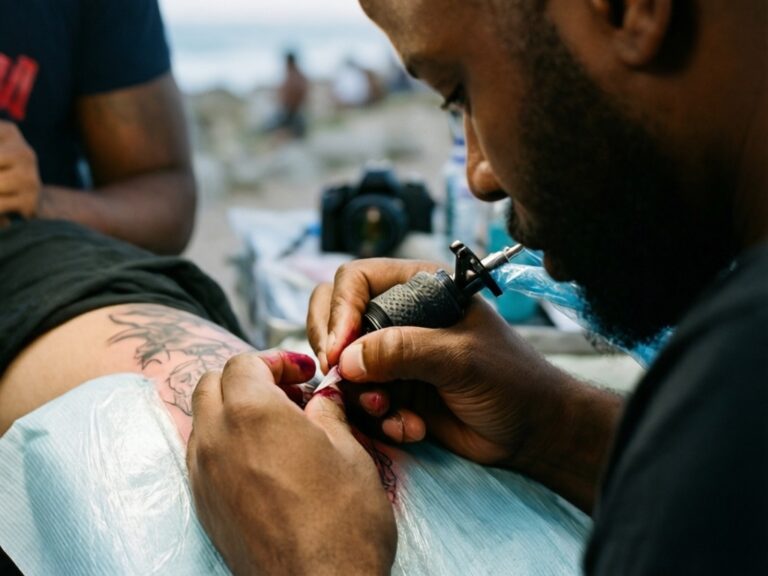
Compliance requires strict, repeatable actions. This includes using new latex or nitrile examination gloves for every single client and throughout the entire duration of the procedure . It also demands adherence to the South African Body Art Code, which dictates how sharps and biohazardous waste must be handled . Professionalism in this trade means following these protocols without exception.
What to look for during a studio visit
When you walk into a shop in Bloubergstrand or Parklands, look past the art. The real work happens in the margins of the procedure. An artist must use new latex or nitrile examination gloves for every single client and never reuse them during a session . Watch how they handle their tools. Proper compliance means following the South African Body Art Code with strict protocols for sharps and biohazardous waste . This includes specific standards for sterilization and the management of medical waste under local by-laws {{cite:1, 8}}.
Signs of professional training
A clean station is a baseline, not an achievement. You should look for artists who have moved beyond basic aesthetics to include formal training in First Aid and blood pathogens . This level of preparation ensures they can manage the specific risks associated with skin penetration. If the studio lacks clear systems for handling waste or follows no visible sterilization standard, the risk is on you.
The gap between what studios present and what they practise
A polished digital presence can mask a messy reality. It is easy to mistake a high-quality photo for a high-quality standard of care.
You will often find a disconnect between the marketing and the workstation. Look closely at what is being promised against what you actually see when you sit in the chair:
- The Instagram feed shows clean, sterile setups. The actual workstation has cluttered, unsterilised surfaces.
- The price seems like a bargain. The low cost hides a lack of proper medical waste disposal fees .
- The artist claims to be a professional. They lack the basic training to manage skin-penetration risks.
Do not trust a curated image. A studio might present itself as a gallery, but if they are cutting corners on hygiene, the art does not matter.
How price signals quality and corner-cutting
Price is a signal you cannot ignore. Reputable studios usually maintain minimum charges between R500 and R700, with hourly rates typically ranging from R800 to R2,000.
If the quote is significantly lower than this, ask why. A low price often hides the true cost of safety. It might mean they are cutting corners on single-use supplies or skipping the necessary fees for professional medical waste disposal .
Before you sit in the chair
Do not let a good design blind you to a bad setup. Before you sit in the chair, ask to see their setup. Watch them open a new needle pack in front of you. Check that they are wearing fresh gloves and that those gloves are changed if they touch anything non-sterile.
The industry is moving toward stricter regulation and professional apprenticeships . There is no excuse for poor hygiene. If the artist becomes defensive when you ask about their cleaning process, walk out.
Frequently asked questions
What should I look for regarding hygiene when visiting a tattoo studio in Bloubergstrand or Parklands?
Look past the artwork to observe how tools are handled. Ensure the artist uses new latex or nitrile gloves for every client and follows the South African Body Art Code for managing sharps and biohazardous waste. A clean station is a baseline requirement, not an extra achievement.
Why is medical waste management important for tattoo artists in Cape Town?
Compliance with medical waste management by-laws is a legal requirement in South Africa. These regulations are designed to prevent the transmission of serious bloodborne pathogens, such as Hepatitis B and HIV, by ensuring that skin-penetration risks and biohazardous waste are handled safely.
How can I tell if a tattoo studio is cutting corners on safety?
Be wary of studios with extremely low prices, as this may hide the true cost of safety, such as medical waste disposal fees. Also, watch for a disconnect between a polished Instagram feed and an actual workstation that has cluttered or unsterilised surfaces.
What are the typical costs for professional tattoo services in the West Coast area?
Reputable studios usually maintain minimum charges between R500 and R700. You can expect hourly rates to typically range from R800 to R2,000. If a quote is significantly lower than this, it may indicate that the artist is skipping essential safety protocols or supplies.
Source: satattoosupply.co.za, iol.co.za, heytattoo.co.za, blacktidefinelinetattooartist.co.za, moneytoday.co.za, bodyartcouncil.co.za