Article re-cap
- Sudden shifts in wind and temperature can occur quickly on trails near Bloubergstrand, making preparation essential.
- Most rescue calls on local trails involve preventable incidents like simple slips, trips, and falls caused by underestimating route difficulty.
- Hikers should carry at least 2 litres of water for a moderate four to six hour hike in mild weather, increasing this amount if it is hot or strenuous.
- You should not rely on Google Maps for navigation on dangerous paths; instead, carry a physical hiking map such as a Slingsby map.
- Before driving from areas like Milnerton, call the CapeNature contact centre on 087 087 8250 to confirm that specific trails are open.
Halfway up a trail near Bloubergstrand, the wind shifts, temperature drops ten degrees, and that bright sun turns aggressive. It happens fast in the Cape. One minute you are enjoying the view, the next you are shivering or burning because your bag was missing the basics.
Why preparation matters on Cape trails
Preparation is about more than just checking a box. It is about understanding that the Cape environment does not give you much leeway when things go wrong. A sudden shift in wind or a drop in temperature can turn a manageable afternoon into a situation where you are physically struggling to stay warm or safe.
Most rescue calls on our trails are not the dramatic, high-altitude climbs you see in movies. Instead, they are often much more preventable incidents involving simple slips, trips, and falls. These happen most frequently when hikers underestimate how difficult a route actually is or fail to prepare for the specific conditions of the day.
Being ready means respecting the volatility of our local weather. Even during the height of summer, you can face extreme heat and intense sun exposure that requires immediate attention [[cite:1]]. When you carry the right gear, you are not just making the hike more comfortable; you are actively reducing the risk of an incident that requires emergency services.
What essential items must go in your pack?
You cannot afford to guess when you are halfway up a trail. The Cape weather shifts without warning, and being caught without the right gear turns a simple walk into a costly emergency {{cite:1, 5}}.
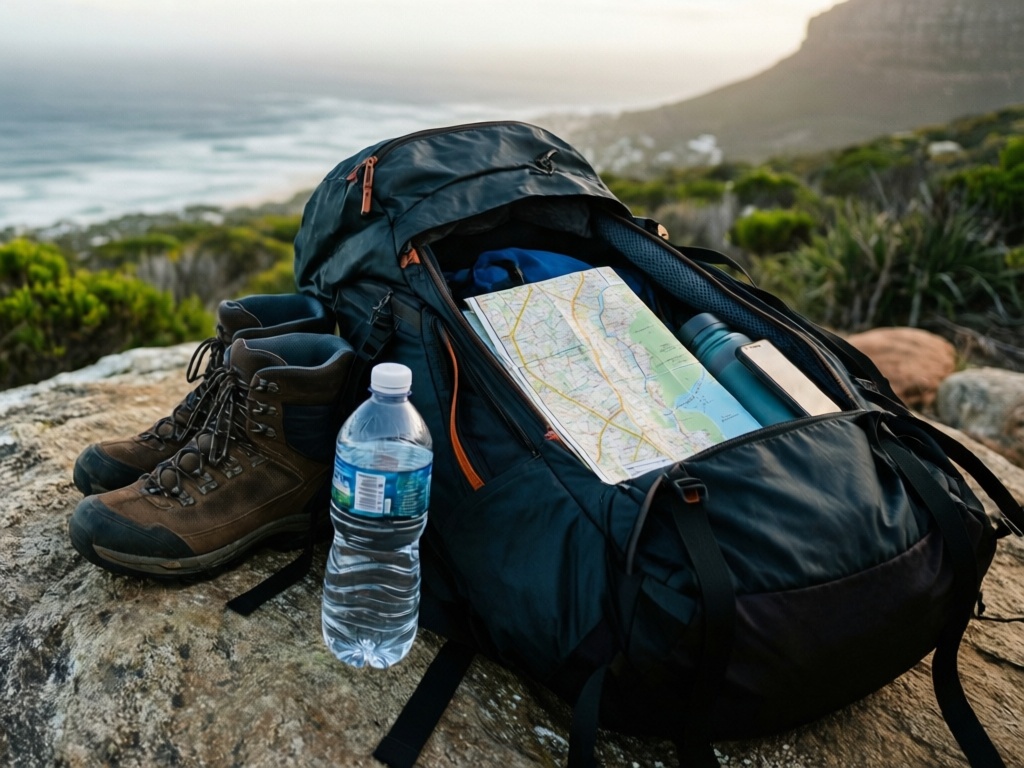
Most rescue calls happen because of preventable slips, trips, and falls that occur when people are unprepared or wearing the wrong gear. To keep your trip safe and avoid unnecessary risk, make sure your pack contains these essentials:
- Clothing: Waterproof and windproof layers for sudden changes, plus a hat and high-SPF sunblock to prevent burns that can happen in just 10 minutes during peak summer months like January [[cite:1, 5, 8]].
- Footwear: Strong boots or shoes with non-slip soles to help prevent falls {{cite:3, 5}}.
- Hydration and Food: At least 2 litres of water for a moderate 4 to 6 hour hike in mild weather, increasing to 3 litres or more if it is hot or the route is strenuous [[cite:7]]. Bring enough food and perhaps a flask for a warm drink [[cite:5]].
- Navigation and Safety: A physical hiking map, such as a Slingsby map, because you should not rely on Google Maps to guide you on dangerous paths [[cite:6]]. You also need a fully charged cellphone and a torch with spare batteries or globes in case you are delayed after dark [[cite:4, 5]].
How do you check trail conditions before you go?
Information is your best tool for avoiding a wasted trip. There is nothing more frustrating than driving from Bloubergstrand or Milnerton only to find a gate locked or a trail blocked by maintenance. Before you pack the car, call the CapeNature contact centre on 087 087 8250 to confirm that the specific trails you want to use are actually open.
If things go wrong while you are out on the trail, you need to act without hesitation. Do not wait for a signal to return or for someone to notice you are missing. If an emergency happens, call 021 937 0300 immediately.
For the full picture, read Guide to Cape Town West Coast nature reserves.
Frequently asked questions
What should I pack to stay safe while hiking in the Cape?
Your pack should include waterproof and windproof layers, a hat, and high-SPF sunblock to prevent burns. Ensure you have strong boots with non-slip soles, enough food, a torch with spare batteries, and a physical map like a Slingsby map for navigation.
How much water do I need for a hike in the West Coast area?
For a moderate four to six hour hike in mild weather, you should carry at least 2 litres of water. If the weather is hot or the route is particularly strenuous, you should increase your supply to 3 litres or more to stay hydrated.
How can I check if a trail is open before I leave Bloubergstrand?
To avoid driving from Bloubergstrand or Milnerton only to find a locked gate, you should call the CapeNature contact centre on 087 087 8250. This allows you to confirm that your intended trails are open and not blocked by maintenance before you start your trip.
What should I do if an emergency occurs while hiking?
If an emergency happens on the trail, you must act without hesitation. Do not wait for a signal or for someone to notice you are missing; instead, call 021 937 0300 immediately to report the situation and seek assistance.
Source: capetown.travel, novanews.co.za, capetownmagazine.com, insideguide.co.za, hilltoppacks.com, nomadseason.com