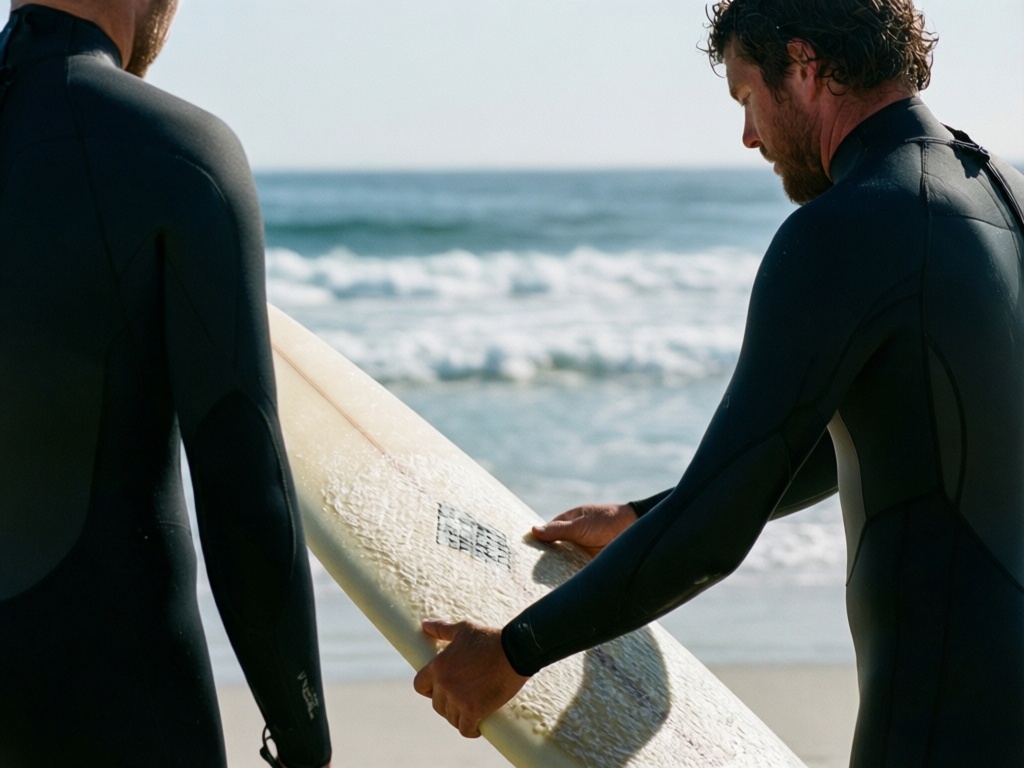
Article re-cap
- The Benguela Current keeps West Coast water between 14 and 16°C in mid-winter, making thermal protection non-negotiable.
- A 4/3mm wetsuit with 3mm neoprene boots is the winter minimum for Table View; in extreme cold, step up to a 5/4mm suit.
- Beginners should ride a soft-top board that is 8ft or longer for the stability needed to learn the pop-up.
- Board volume should match your body weight in kilograms, so an 80kg surfer needs roughly 80 litres of volume.
- Before every session, inspect your suit for tears and check that your boots fit tight enough to prevent flushing but loose enough for movement.
You are paddling out at Bloubergstrand on a July morning with perfect swell. The water is 14°C. Without the right wetsuit and board, your session ends before it starts.
Why the Benguela Current changes everything
Checking the swell at Bloubergstrand only tells half the story. You can have perfect waves, but without the right wetsuit you will not last long enough to enjoy them.
On the West Coast, the Benguela Current dictates everything. This current flows northward from the Southern Ocean, bringing nutrient-rich, freezing water along the Atlantic side .
It keeps temperatures around Cape Town and Table View cool year-round, typically ranging between 10 and 16°C .
You do not just pick gear based on how the air feels; you pick it based on what that current is doing to the water. On this coast, the ocean temperature stays low regardless of the summer sun.
What thickness do you need?
Finding your thickness
Wetsuit thickness is measured in millimetres, usually shown as two numbers like 3/2 or 4/3. The first number refers to the neoprene thickness across your chest and back, while the second covers your limbs .
For the West Coast, a thicker suit is not a luxury; it is a requirement. If you are paddling near Table View in mid-July, when temperatures drop to between 14 and 16°C, you need a 4/3mm or even a 5/4mm suit {{cite:2,3,4}}.
If you under-gear, your core temperature drops, your muscles stiffen, and your focus vanishes. To stay in the water, pair that thicker neoprene with 3mm neoprene boots . It is about maintaining mobility while blocking the chill.
How much board volume should you choose?
Stability through volume
Board selection is where many new surfers stall. The goal is not to look like a pro on a shortboard; the goal is to catch waves. For those following the steps in our guide on How to Start Surfing on the Cape Town West Coast, stability is the priority.
Look for soft-top surfboards that are 8ft or longer . These boards are more stable, easier to paddle, and much more forgiving when you are finding your balance {{cite:7,8}}.
A key metric to check is volume. A beginner should aim for a board volume equivalent to 100 percent of their body weight in kilograms . If you weigh 80kg, look for roughly 80 litres of volume.
It is easy to get distracted by the sleek, heavy boards seen in films, but those require a level of fitness and technique that most people do not start with. The soft-top provides the float you need to actually learn the mechanics of the pop-up.
How do you prepare before paddling out?
There is a specific rhythm to West Coast surfing. You check the wind, you check the tide, and then you check your seals. A quick scan of the shoreline ensures no unexpected visitors are disrupting your line. Beyond that, inspect your kit with a critical eye. Ensure your suit is free of tears and your boots are tight enough to prevent flushing but loose enough to allow movement.
Before you leave home, check the seasonal sea temperature forecast against the wetsuit thickness thresholds above. If mid-July water at Table View sits between 14 and 16°C and you are carrying a 3/2mm suit, turn back and fetch the 4/3mm. Five minutes of preparation at home saves a miserable, muscle-stiffening session in the water.
Also verify board volume before you hire or buy. Ask the rental shop for the volume in litres and compare it against your body weight in kilograms. A board that is under-volumed will sit low in the water, make paddling harder, and slow down your progress significantly. Shops such as those operating along the Big Bay and Bloubergstrand stretch carry soft-tops in a wide range of volumes, so there is no reason to compromise on this number.
For the full picture, read How to Start Surfing on the Cape Town West Coast.
Frequently asked questions
What wetsuit thickness do I need for Table View in July?
A 4/3mm wetsuit with 3mm neoprene boots is the minimum for mid-July, when sea temperatures at Table View sit between 14 and 16°C. In extreme cold, step up to a 5/4mm suit. A thinner 3/2mm suit will leave your core temperature dropping within minutes and cut your session short.
What board volume should a beginner use?
A beginner should ride a board with volume equivalent to 100 percent of their body weight in kilograms. An 80kg surfer therefore needs roughly 80 litres of volume. This keeps the board high in the water, makes paddling easier, and gives you the stability required to learn the pop-up properly.
Why is the water so cold on the West Coast even in summer?
The Benguela Current flows northward from the Southern Ocean along the Atlantic side of the Cape Peninsula, bringing cold, nutrient-rich water with it. This keeps temperatures around Cape Town, Bloubergstrand, Table View and the broader West Coast cool year-round, typically ranging between 10 and 16°C, regardless of how warm the air feels on the beach.
What type of surfboard should a beginner hire?
Beginners should look for a soft-top surfboard that is 8ft or longer. Soft-tops are more stable and easier to paddle than hard boards, and they are far more forgiving when you are still working on your balance and pop-up technique. Many rental outlets along the Big Bay and Bloubergstrand coastline carry a range of soft-tops specifically for learners.
Source: seatemperature.org, surf-forecast.com, wetsuitwarehouse.co.za, surfertoday.com, southafricasurftours.com, surfemporium.co.za