
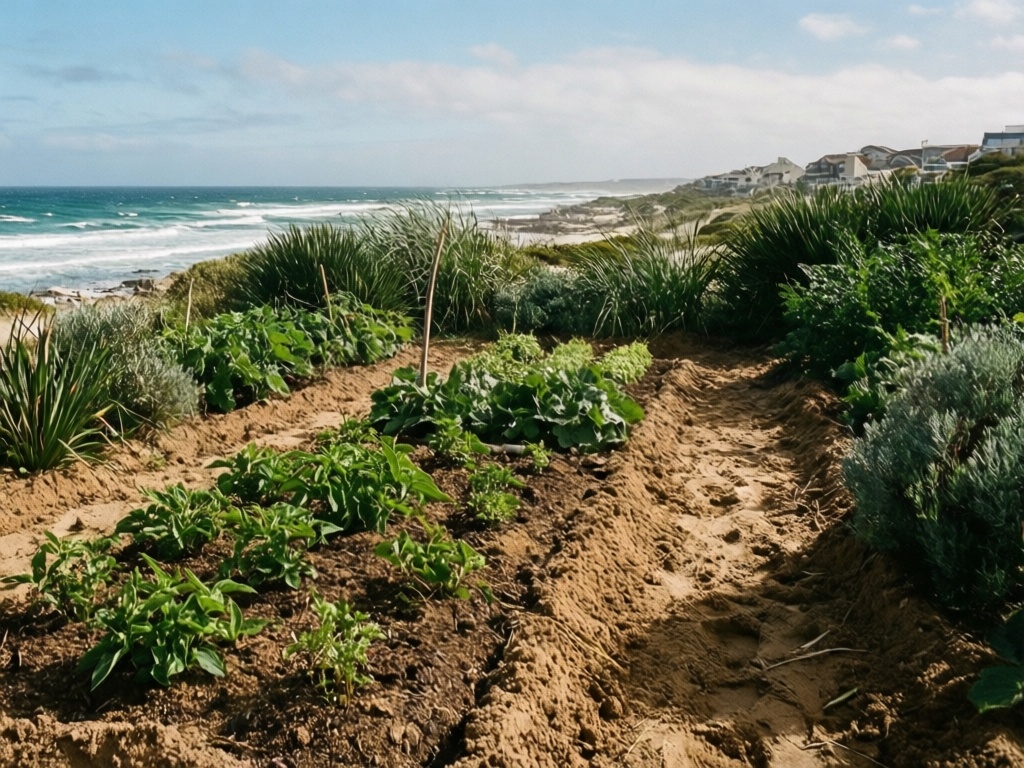
This guide helps West Coast gardeners understand how to manage fast draining sand, salt spray, and heavy winds. Learn which hardy plants thrive in coastal conditions and how to improve your soil for a resilient, waterwise garden.
What are the challenges of coastal sandy soil?
Let us be honest about what you are dealing with when you dig into the ground here. Coastal sandy soil is a fickle companion because it lacks the substance to hold onto anything for long. Water moves through it far too quickly, draining away before the roots can even take a proper drink. You will find that nutrients leach out with every heavy rain or summer irrigation, leaving your plants hungry and struggling.
The wind is another matter entirely. The southeaster does not just bring salt spray to your leaves, it also strips the moisture from the surface of the sand. This constant drying effect makes it hard for even hardy species to establish themselves without help. Without a thick layer of mulch, the sun will bake the grit until it is nothing more than a dry, lifeless crust.
Salt spray adds another layer of difficulty to your gardening efforts. The salt settles on the soil and can interfere with how plants take up water, creating a harsh environment that rejects anything not built for the coast. You must learn to work with these conditions rather than fighting them. If you try to force a thirsty, delicate plant into this sand, you will only end up wasting your time and your money.
Success here requires a shift in how you view your garden. Instead of looking for lush, green perfection, look for resilience and the ability to endure the salt and the drought. You can improve your chances by focusing on building organic matter into the sand. If you plan carefully, you can create a stable environment that supports a waterwise garden even in these tough conditions.
Which plants thrive in sand and salt air?
If you want a garden that stays standing when the southeaster blows, you must look to plants that have already mastered the art of survival in salt and sand. You are not looking for soft, leafy things that wilt at the first sign of spray. You need species with thick, waxy leaves or silver, hairy surfaces that can shrug off the salt and hold onto their own moisture. These hardy varieties act as your first line of defence against the drying wind.
Coastal succulents are a reliable choice because they store water in their fleshy leaves, making them much more forgiving when the summer drought sets in. Species like Carpobrotus, often called sour fig, are excellent for covering bare patches of sand and helping to stabilise the ground. They can handle the salt spray without any fuss, and once they establish, they require very little extra water from your irrigation system.
For taller windbreaks, look toward indigenous shrubs and trees that are built for the Cape coast. Coastal proteas and certain types of banksia offer structure and can withstand much of what the ocean throws at them. If you are planning a more permanent garden, it is wise to study the principles of how to plan a waterwise garden for the Cape West Coast so you do not plant something that will simply perish in the heat. Building your garden around these tough, local varieties means you spend less time replacing dead plants and more time watching things grow.
When you are ready to select your stock, you can find many of these resilient varieties at places like Starke Ayres Home & Garden Centre in Sunningdale. Just remember to check the labels for salt tolerance and wind resistance before you commit. It is better to choose a plant that looks a bit rugged now than to buy something beautiful that turns brown by next month. Stick to the hardy stuff, and your garden will learn to thrive in the grit.
How can you improve sandy soil for better water retention?
Improving sandy soil is not about changing what it is, but about adding enough substance to make it hold onto life. The goal is to create a sponge that catches the rain and keeps it near the roots. You do this by introducing organic matter, which acts like a glue to bind the loose grains together. Without this extra material, your water will simply vanish into the depths before any plant can benefit from it.
Compost is your most important tool in this task. Spreading a thick layer of well rotted compost over your garden beds and working it into the top layer of sand provides much needed structure. This organic matter holds moisture and provides a slow release of nutrients that prevents them from leaching away during heavy rains. It might feel like a lot of work at first, but building this foundation is the only way to ensure long term success in our coastal conditions.
Mulching is the second vital step in managing water retention. A heavy layer of organic mulch, such as bark or composted wood chips, acts as a protective blanket for the soil. It shields the sand from the drying effects of the southeaster and keeps the surface temperature cooler during our harsh summer months. This helps to stop the evaporation that happens so quickly when the sun hits bare grit.
You should also consider how you manage your water through more permanent systems. If you are installing a greywater system or managing a borehole, use that water to keep the moisture levels steady in your new organic layers. Integrating these methods into your plan for a waterwise garden can help stabilize the environment for your plants. It is about creating a cycle where the soil stays damp, the mulch stays thick, and the roots stay fed.
Why is mulching essential for coastal gardens?
Mulching is your best defence against the drying power of the wind and sun. In our coastal environment, bare sand acts like a sieve, letting every drop of precious moisture drain away before it can reach the roots. A thick, heavy layer of mulch serves as a protective blanket that seals the moisture in the ground. It stops the heat from baking the soil surface and keeps the temperature steady for the life living underneath.
The southeaster is a thief that steals water from your garden through evaporation. When the wind blows hot and dry across the sand, it pulls moisture straight out of the earth if there is nothing covering it. By applying organic mulch like bark or wood chips, you create a physical barrier that breaks the wind's contact with the soil. This simple layer helps to maintain the humidity levels your plants need to survive a long, harsh summer.
Beyond just holding water, mulch helps to build the very soil you are trying to improve. As the organic material slowly breaks down over time, it adds much needed nutrients and structure back into the sandy grit. This process supports the worms and microbes that keep your garden healthy. It is a slow way to work, but it is the honest way to create a lasting foundation for your plants.
Do not be stingy with the application, especially in new beds or around young, vulnerable plants. A thin layer will dry out and blow away in the first big gale, leaving your soil exposed once again. Aim for a depth that feels substantial enough to stay put when the weather turns. If you manage your mulch well alongside your plans for a waterwise garden, you will find much less struggle when the heat arrives.
How do you protect soft plants from the southeaster?
Protecting soft plants from the southeaster requires you to think about physical barriers and placement before the wind even starts to howl. You cannot expect a tender, leafy plant to stand tall against a heavy gale if it is sitting out in the open. The first rule is to use your hardier, established plants as a shield. Plant your tough, salt tolerant species on the windward side of your garden to create a natural windbreak that breaks the force of the air before it hits the delicate stuff.
If you are working with particularly vulnerable new plantings, consider using temporary physical protection like mesh or light screening. This does not replace the need for a permanent windbreak, but it can help during those first critical months when roots are still finding their grip in the sand. You might also use larger stones or heavy pots to anchor smaller containers, as the wind can easily tip them over and expose the root ball to the drying air.
The way you group your plants matters just as much as where you put them. Creating dense clusters of vegetation helps trap a pocket of more humid, still air within the garden bed. This microclimate reduces the direct impact of the wind on individual leaves and prevents the rapid moisture loss that leads to scorched edges. It is about building layers of protection so that each plant sits in the lee of another.
Always remember that the goal is resilience through structure. If you find yourself struggling with frequent wind damage, it might be time to visit a local nursery like Starke Ayres Home & Garden Centre in Sunningdale to find more robust varieties better suited for the coast. By choosing plants that can handle the salt and wind, you are working with the natural conditions of the Cape rather than fighting a losing battle against them.
Conclusion
Success in a coastal garden comes down to managing the wind and the water. By using heavy mulch to hold moisture in the sandy soil and planting hardy species as windbreaks, you create a stable environment for your softer plants to thrive. Focus on building layers of protection and working with the natural salt and wind conditions rather than fighting against them.
If you follow these methods, you are building a garden based on resilience and long term survival. It is about making sure every plant has the right cover and the right placement to withstand the Cape seasons. Do it the hardy way, and your garden will stand much stronger when the southeaster arrives.