Article re-cap
- The Constitutional Court ruled the R135 million Tafelberg site sale unlawful, finding the Western Cape Government and City of Cape Town failed their constitutional housing obligations.
- The Western Cape's average property price in the first quarter of 2026 was R3,357,917, some 72% above the national average, according to property strategist Nathan Scott.
- A household needs a net income of roughly R55,000 to R60,000 a month to qualify for a bond on a standard R2.5 million three-bedroom home in areas such as Bellville or Durbanville.
- Industry figures say high construction costs, expensive land and slow planning approvals push developers toward the luxury end of the market, leaving the middle market underserved.
- Both the city and the province have been ordered to report to the Western Cape High Court within three months on their plans for affordable housing in and around the CBD.
The Constitutional Court has declared the R135 million sale of the Tafelberg site in Sea Point unlawful, ruling that the Western Cape Provincial Government and City of Cape Town failed to meet constitutional obligations regarding social housing.
The unanimous judgment, penned by Justice Nonkosi Mhlantla, delivered a damning indictment of the provincial government and the city for failing to dismantle the legacy of apartheid spatial planning. The court found that both authorities failed to comply with obligations to provide access to adequate housing and failed to complete social housing programmes in the Cape Town CBD and Sea Point.
Justice Mhlantla stated that location is not a peripheral consideration in housing policy but is integral to the reasonableness inquiry, and that the city and the province have a constitutional duty to reverse "patterns of exclusion" that divide Cape Town along racial and class lines, keeping poor and working-class communities out of amenity-rich areas such as the CBD and Sea Point.
The ruling follows the provincial government's 2015 decision to sell the property, which previously housed the Tafelberg Remedial School, to the Phyllis Jowell Jewish Day School for R135 million. Housing activists, led by Reclaim the City and Ndifuna Ukwazi, challenged the sale. The school cancelled the offer in 2020 during the high court challenge, and in August 2020 the Western Cape High Court set aside that sale and declared that the Western Cape Government and the city failed to redress spatial apartheid, but that ruling was subsequently overturned by the Supreme Court of Appeal before the Constitutional Court reinstated the finding. The court found the disposal unlawful due to failures in public participation, and that the improper classification of the property as surplus land also contributed to the unlawfulness of the disposal. Activists sought to set aside this sale, arguing that well-located provincially owned land must be made available for social housing to redress spatial apartheid.
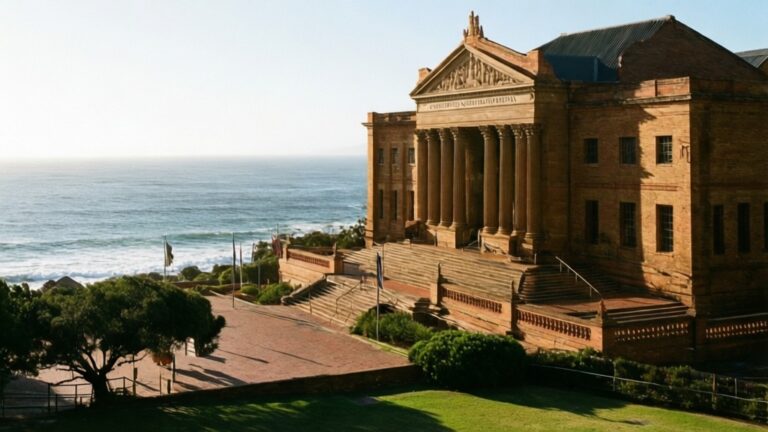
The Tafelberg site is a 1.7-hectare provincially owned property at 355 Main Road, Sea Point. The Phyllis Jowell Jewish Day School, which was the buyer, currently operates from a campus in Camps Bay.
The sale was announced in January 2016, acting on the orders of the then Premier Helen Zille. The original application was brought before the Western Cape Division of the High Court in May 2017, with nurse Thozama Angela Adonisi, a resident of a basement dwelling in Sea Point and a member of the Reclaim the City leadership committee, as the first applicant and deponent of the founding affidavit.
The applicants in the case were Sea Point residents Thozama Angela Adonisi, Phumza Ntutela, Sharone Daniels and Selina la Hane, together with Reclaim the City and the Trustees of the Ndifuna Ukwazi Trust. The respondents were the provincial departments of transport and public works, the Premier, the Western Cape Provincial Government and the City of Cape Town.
The case has its roots in 2010, when the Tafelberg Remedial School relocated to new premises in Bothasig, leaving the Sea Point site vacant. A Social Housing Regulatory Authority feasibility study in 2012 identified the land as suitable for social housing. After the 2015 sale announcement, Ndifuna Ukwazi obtained a high court interdict in 2016 halting the sale pending litigation. The case was launched in the Western Cape High Court in 2017. Weeks before the Constitutional Court hearing in 2025, the provincial government unexpectedly announced that the site would not be sold and would instead be used for government services as well as affordable housing.
The sale has since been cancelled, and the site is earmarked to be used for government services as well as social housing for households earning between R3,500 and R22,000 a month, according to GroundUp.
New data published after the ruling underlines the scale of the affordability gap. The Western Cape's average property price in the first quarter of 2026 was R3,357,917, according to Cape Town property strategist Nathan Scott, 72% above the national average of R1,951,230. Scott said a household needs a net income of roughly R55,000 to R60,000 a month to qualify for a bond on a standard R2.5 million three-bedroom home in Bellville, Durbanville or the Winelands corridor.
Finella Botes, a high-value property consultant at Seeff Atlantic Seaboard, said the Tafelberg judgment reaches beyond the single property. She said she does not expect it to shift the luxury market immediately but predicts it will bring closer scrutiny to how strategically located land is developed in future.
Developer Julia Finnis-Bedford, founder of Amazing Spaces, said Cape Town is producing high-end stock at pace while the middle market goes underserved. She said high construction costs, expensive land and slow planning approvals push developers toward the top end, where margins can absorb delays. "It is not always a choice driven by vision. Often it is driven by viability," she said.
In April 2024 the Supreme Court of Appeal found in favour of the provincial government. That same year, a documentary film, Mother City, co-created by journalists Pearlie Joubert and Miki Redelinghuys and centring on Ndifuna Ukwazi and the Tafelberg case, made its international premiere at the Sheffield DocFest in June 2024.
The Western Cape Government argued the site is not suitable for social housing and intended to use it for a school. However, Judge Nonkosi Mhlantla stated that housing policies must actively work to dismantle rather than perpetuate the spatial legacy of apartheid, particularly when dealing with well-located state land in urban centres.
The court has put both the city and the province on terms to submit a report to the Western Cape High Court within three months. This report must detail current policies for affordable housing in the CBD and steps taken to fulfil constitutional obligations, including coordination between provincial and city spheres of government. The court specified that this schedule must cover affordable housing projects in the CBD completed since the case was first launched in 2017, those currently under construction, and those under consideration. Social housing activists from Ndifuna Ukwazi will be afforded the opportunity to respond to the province's plans, and the matter may be re-enrolled for further determinations.
The apex court noted that, based on the record before it, the City had at the time implemented no projects for social or affordable housing within the CBD, and found no satisfactory evidence that pipeline projects would materialise, with several having been abandoned or stalled for more than a decade. The court held that high market value or land scarcity, themselves legacies of apartheid, were not excuses for the city and the province to evade their constitutional duties.
Justice Mhlantla found that there is no rationale for the fact that the province has not provided affordable housing in inner-city areas such as Sea Point or elsewhere near economic nodes. She stated that the province may not selectively ignore its duty to combat spatial injustice by arguing that it provides housing for the most in need on the outskirts, and that some of the resources devoted to affordable housing outside the CBD should have been redirected to affordable housing in the CBD and Sea Point.
The court also found that the province failed to conduct meaningful public participation before disposing of the Tafelberg property, and declared parts of the Western Cape Land Administration Act regulations unconstitutional because they permitted public participation only after a sale agreement had already been concluded. The court also declared unconstitutional the regulations under the Western Cape Land Administration Act that permitted public participation to take place only after the conclusion of a valid contract for the sale of state land.
The court noted that the first round of public comment after the decision to sell was held in November 2015, falling squarely within the Christmas holiday period. The notice did not identify the buyer or the proposed purchase price of R135 million, factors the court found compounded the inadequacy of the consultation process.
The court suspended the declaration of unconstitutionality of the Western Cape Land Administration Act regulations for 12 months to allow the province to remedy the legislative defect. The province was also ordered to pay the applicants' costs, including the costs of two counsel, in the High Court, Supreme Court of Appeal and Constitutional Court.
The court described the public consultation process as a "tick-box exercise" that did not meaningfully engage affected communities. Justice Mhlantla held that "paper plans and incomplete undertakings do not amount to constitutional compliance", emphasising that actual implementation of housing obligations is required.
The court also found that the Western Cape Government failed to consult the national Department of Human Settlements before disposing of the Tafelberg property, and ruled that this unilateral alienation of a strategically located public asset disabled the intergovernmental co-ordination presupposed by the Government Immovable Asset Management Act and the housing framework. The Minister of Human Settlements had entered the proceedings as a party, arguing that the national department should have been consulted before the site was declared surplus, and sought an order reviewing and setting aside that decision.
Minister of Human Settlements Thembi Simelane welcomed the judgment, describing it as "an important affirmation of government's constitutional obligations in advancing spatial justice and equitable access to well-located land." Simelane said dismantling the spatial inequalities created during apartheid remains a central government priority, adding that the strategic release and effective use of well-located public land is critical to accelerating affordable housing delivery and building inclusive, integrated human settlements. "This judgment serves as an important reminder of our collective responsibility to ensure that public assets are managed in a manner that advances the public interest and gives effect to the constitutional right of access to adequate housing," she said. The ministry noted that during the 2025/26 financial year, the Housing Development Agency acquired more than 2,447 hectares of well-located land to support the development of sustainable and integrated human settlements across South Africa. Simelane also acknowledged the role played by civil society organisations and communities in advancing social justice through constitutional processes.
The Socio-Economic Rights Institute of South Africa (Seri), admitted as a friend of the court, argued that the Western Cape government's failure to ensure affordable housing in economic hubs perpetuated apartheid spatial patterns. Seri spokesperson Edward Molopi said the case highlighted Cape Town's crisis and failure to provide access to affordable housing, noting that since the dawn of democracy there has not been a single social housing project in the Cape Town CBD.
Disha Govender, former head of the Ndifuna Ukwazi Law Centre and lead attorney representing Ndifuna Ukwazi at the Constitutional Court hearing, said: "This judgment is not only going to change this city and this province. It has the power to change the country and how it prioritises the social value of land."
Dakalo Singo, Director and Head of Pro Bono at Werksmans Attorneys, said the ruling also has important implications for the principle of constitutional subsidiarity, noting that the judgment clarifies that subsidiarity is not always the end of the inquiry, particularly where courts assess whether government has reasonably implemented constitutional rights. Singo said the court did not abandon the principle but qualified it, contributing to the redressing of the spatial injustice inherited from apartheid and to advancing social justice and transformation.
Housing activists gathered at the Sea Point Methodist Church to watch the livestream of the ruling. Sheila Madikana, a domestic worker and leader in Reclaim the City who currently resides at the Helen Bowden Nurses Home, which was occupied along with the old Woodstock Hospital in protest against the original decision to sell Tafelberg, said the ruling comes after a ten-year litigation journey. "We are not fighting a losing battle because we know what we want - a CBD where the poor must also live," she said. "We need to live here where we wake up next to our jobs, not wake up at 03:00 just to be here at 07:30." She added: "This is our land. We fought for what is ours. There is no way that people can be pushed out of the city. The city must be a mixed-use city for each and every one." After the judgment, activists marched from the Sea Point Methodist Church down the main road to the Tafelberg site, less than a kilometre away, carrying placards reading "Reclaim the City" and "Land 4 people not for profit" and singing "My mother was a kitchen girl", which has become an anthem for Reclaim the City.
The judgment highlighted the impact of spatial injustice on workers who travel for hours from the city periphery to the centre in pre-dawn darkness. Justice Mhlantla noted that these daily journeys serve as a living testament to the enduring legacy of spatial injustice exposed by the case.
The City of Cape Town said it welcomes the opportunity to update the court on its affordable housing progress, pointing to approximately 4 000 affordable units entering construction in the inner city this year and a broader pipeline of 12 000 affordable housing units in well-located areas including the CBD and other economic nodes. Completed projects cited by Mayoral Committee Member for Human Settlements Carl Pophaim include more than 200 social rental units at Maitland Mews, over 1 000 units at Goodwood Station and more than 400 units at Bothasig Gardens. Pophaim also noted that the city is supporting various province-led affordable housing projects in central Cape Town, including at the Tafelberg site itself, which he referred to as 353 on Main. The city attributed constraints on delivery to a severe lack of national Social Housing grant funding, and welcomed the court's acknowledgement that intergovernmental consultation would be necessary in future land development processes. Infrastructure MEC Tertuis Simmers said the provincial government noted the judgment and was studying it in detail, with a comprehensive response to follow.
COSATU in the Western Cape described the ruling as a "monumental victory" for the right to adequate housing. Provincial secretary Malvern de Bruyn said the judgment rejects the view that treats public land as mere commercial assets, and called for full accountability. "Heads must roll. The officials and political office bearers who pushed this unlawful sale against all legal advice and public sentiment must face consequences," he said.
South African Multifamily Residential Rental Association CEO Palesa Mkhize said the ruling strengthens the case for well-located rental housing in CBDs and urban nodes, describing urban sprawl as the direct result of decades of pushing low- and middle-income households away from jobs, schools and clinics.
Infrastructure MEC Tertuis Simmers said the province respects the judgment and will study its implications while complying with the court's orders. Simmers said the ruling reinforces the principle that affordable housing should be located near jobs, transport, schools and healthcare facilities. He pointed to developments including Conradie Park, Founders Garden, Prestwich and Leeuloop as examples of the province's efforts to promote mixed-income communities.
Infrastructure MEC Tertuis Simmers said he will soon present a ministerial policy statement on spatial transformation and affordable housing reform, in response to the Constitutional Court ruling.
ActionSA MP and mayoral candidate Dereleen James said the judgment reaffirms that both the province and the city have a constitutional obligation to proactively undo apartheid spatial planning by securing well-located land for affordable housing in and around the Cape Town CBD, and that location is itself a constitutional imperative. GOOD Party Secretary-General Brett Herron welcomed the ruling, saying it dismantled a central pillar of what he described as the DA's policy of maintaining spatial injustice in Cape Town. He noted that, 32 years after the end of apartheid, neither the city nor the province had developed any affordable housing in suburbs previously declared White Group Areas, and that such public housing as had been delivered slavishly follows the old spatial template. Herron said the ruling confirmed governments must move beyond planning documents and demonstrate actual delivery. "Today's judgement is momentous, affirming the obligations of city and provincial governments to oversee the progressive realisation of rights conferred by the Constitution," he said. Herron said the ruling builds on the Constitutional Court's 2000 Grootboom judgment and goes further by making clear that the location of housing is an essential part of whether government has acted reasonably in fulfilling its constitutional obligations.
Herron, now the GOOD Party's mayoral candidate, followed up the judgment with a statement on Sunday accusing the City of Cape Town of failing to take responsibility for years of delays in delivering affordable housing. He recalled that in July 2017, while serving as the city's Mayoral Committee member for Transport and Urban Development, he announced ten city-owned inner-city sites in Salt River and Woodstock earmarked for affordable housing. Herron said no affordable homes had been delivered on those sites since that announcement, claiming the projects had been cancelled, reannounced and relaunched repeatedly, with, in his words, zero bricks on the ground. He criticised the city's post-judgment response, describing its claim of undeniable progress as a failure to read the room and an affront to Capetonians who care about equality and justice.
ActionSA mayoral candidate Dereleen James described the ruling as a "landmark judgment" exposing failures by the DA-led administrations. "The judgment confirms what thousands of Capetonians already know: despite years of promises, the DA has failed to deliver well-located, affordable housing where it is needed most," she said. James said the court made clear that "policy documents and paper plans are no substitute for meaningful action", and stressed that the location of housing is a constitutional imperative. ActionSA said the ruling reinforces the need for a shift in urban planning priorities, including conducting an immediate audit of all city-owned land, releasing strategically located land for affordable housing, and accelerating redevelopment projects in areas such as District Six. James pledged to conduct an immediate audit of all city-owned land to identify suitable sites for affordable housing and to make the 15-minute city model central to urban planning.
The ANC in the Western Cape described the ruling as a strong indictment against former premier Helen Zille, under whose watch the 2015 decision to sell the Tafelberg site was taken. The party said the judgment is a victory for thousands of working-class families excluded from living closer to economic opportunities, and maintained that the site remains ideal for social housing.
Sandra Dickson from the GOOD Party said the judgment "reaffirmed that meaningful public participation is not a box-ticking exercise when decisions are made about public land", and that residents must have a real opportunity to be heard before decisions are effectively finalised. Dickson cited the proposed disposal of Erf 9702 in Brackenfell, where residents have opposed the sale of the land since 2021 and have repeatedly asked that the site be used in a way that adds value to the environment and benefits the wider Brackenfell community. She said the land has been placed out to tender by the City despite ongoing community objections, and that efforts by residents and ratepayer representatives to obtain information, raise concerns and secure meaningful engagement have been blocked, declined or deferred through official City processes. Dickson said this is not an isolated concern, noting that in other areas residents are also raising objections where blocks of affordable flats are being planned for unsuitable sites without proper engagement on location, infrastructure, traffic, safety, environmental impact and long-term community fit. "Communities are not opposed to housing. They are opposed to being ignored," she said.
Mayor Geordin Hill-Lewis had in October 2025 told Daily Maverick that the term "spatial apartheid" was "kind of propaganda language that is no longer rooted in reality", later clarifying he was commenting on the narrative put forward by the activists and not dismissing the fact that the legacy of spatial apartheid exists. The Constitutional Court's unanimous ruling on 2 July 2026 directly contradicts that characterisation, finding that both the City and the province had been perpetuating the spatial legacy of apartheid.
The court ordered both the Western Cape Government and the City of Cape Town to submit reports to the Western Cape High Court within three months, setting out their current policies, projects and programmes for affordable housing within the CBD. The reports must include a schedule of completed and under-construction affordable housing projects, budgetary resources spent, whether national funding has been requested, and details of any intergovernmental coordination. The parties were given leave to file further affidavits and, if necessary, to re-enrol the matter in the high court.
Frequently asked questions
What did the Constitutional Court decide about the Tafelberg site?
The court declared the R135 million sale of the Tafelberg site in Sea Point unlawful, finding that the Western Cape Provincial Government and the City of Cape Town failed to meet constitutional obligations regarding social housing and public participation.
How unaffordable is property in the Western Cape compared with the rest of South Africa?
According to property strategist Nathan Scott, the Western Cape's average property price in the first quarter of 2026 was R3,357,917, which is 72% above the national average of R1,951,230.
What income does a household need to buy a standard home in areas such as Bellville or Durbanville?
Scott said a household needs a net income of roughly R55,000 to R60,000 a month to qualify for a bond on a standard R2.5 million three-bedroom home in Bellville, Durbanville or the Winelands corridor.
Why do developers focus on the luxury market rather than the middle market in Cape Town?
Developer Julia Finnis-Bedford of Amazing Spaces said high construction costs, expensive land and slow planning approvals push developers toward the top end of the market, where margins can absorb delays, making it a matter of viability rather than vision.
What must the city and province do following the Constitutional Court ruling?
Both the Western Cape Government and the City of Cape Town must submit reports to the Western Cape High Court within three months detailing their current policies, completed projects and pipeline plans for affordable housing in and around the Cape Town CBD.
Source: iol.co.za, news24.com, businessday.co.za, insidepolitic.co.za, fullview.co.za, vocfm.co.za, moneyweb.co.za, capetowner.co.za, enca.com, dailyvoice.co.za, dailymaverick.co.za, magic828.co.za, smilefm.co.za, ewn.co.za, capetownetc.com, insidemetros.co.za, groundup.org.za, allafrica.com, bizcommunity.com, capeargus.co.za, forgood.org.za, businesstech.co.za, politicsweb.co.za