Article re-cap
- A professional tattoo studio must use single-use items such as needles, tubes, and ink caps to prevent cross-contamination.
- Sterilised metal tools should be kept in packs that the artist opens in your presence, having been processed in an autoclave.
- Tattoo artists should wash their hands for at least twenty seconds both before starting and after touching your skin.
- All used needles must be disposed of in approved sharps containers, while blood-soaked cloths must go into red biohazard bags.
- A valid Health Permit is essential to prove that local authorities have inspected and approved the studio's safety standards.
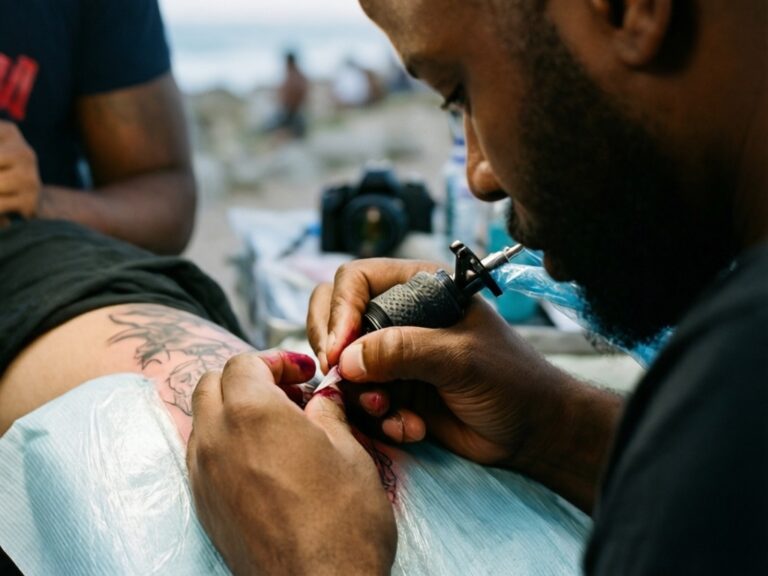
You watch the artist reach for a needle sitting on an open tray. It is a small thing, but enough to make you wonder what else the studio cuts corners on. Getting a tattoo is permanent. Infections and blood-borne diseases can follow you for life.
What to watch for in the studio
The basics of a clean station
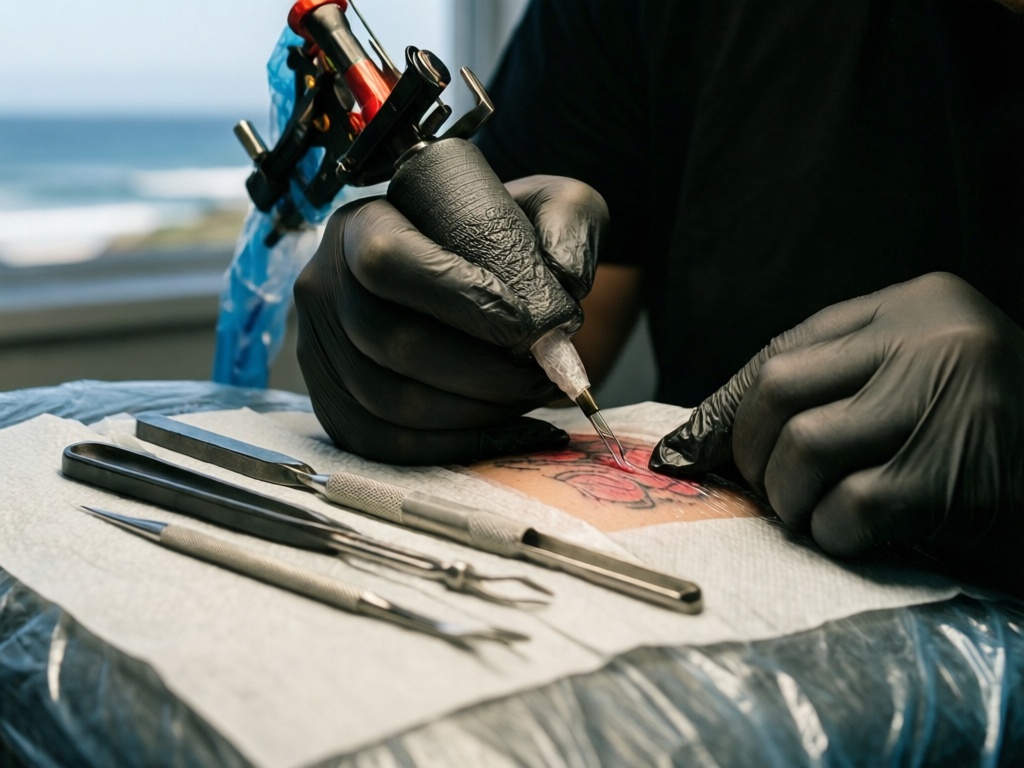
A professional setup relies on single-use items like needles, tubes, and ink caps to ensure nothing from the last person is passed to you . If an artist is reusing anything that should be disposable, they are cutting corners that you will eventually pay for.
For the tools that cannot be thrown away, the gold standard is an autoclave, which uses high-pressure steam to kill everything living on the metal . You should watch as the artist opens these sterile packs right in front of your eyes, and you should see them change their gloves if they touch anything else during the session .
Managing the mess
It is worth checking how the studio handles waste. Needles must go into approved sharps containers, and any cloth soaked in blood needs to go straight into a red biohazard bag .
How the artist should handle hygiene
The hands of the artist
You can watch an artist clean their tools all day, but it does not matter much if they forget the most basic part of the job. The hands and the gloves are the main way germs move from one person to another during a session .
A professional knows that cross-contamination is a silent problem. They should be washing their hands for at least twenty seconds both before they start and after they have finished touching your skin . It is a simple enough task, but it is the kind of thing people skip when they are in a hurry to get to the next client.
Why permits and testing matter
It is easy to think that a clean-looking floor and a tidy desk are enough, but the real work happens where you cannot see it. A studio might look fine on the surface, but the paperwork tells the true story of how they run things.
A professional shop must hold a valid Health Permit to operate legally. In Cape Town, tattoo studios operate under City of Cape Town Environmental Health bylaws and must hold a valid Health Permit issued by the municipality. This is not just a piece of paper for the wall; it is proof that the local authorities have checked their standards and found them acceptable. If the studio fails to keep up with these regulations, that permit can be suspended or even revoked entirely .
The same goes for the equipment. You might see an autoclave sitting in the corner, but you should care about what is happening inside it. These machines must pass regular spore tests to prove the high-pressure steam is actually killing everything living on the metal . If those laboratory results come back bad, the shop is no longer safe for business.
What happens after the needle stops
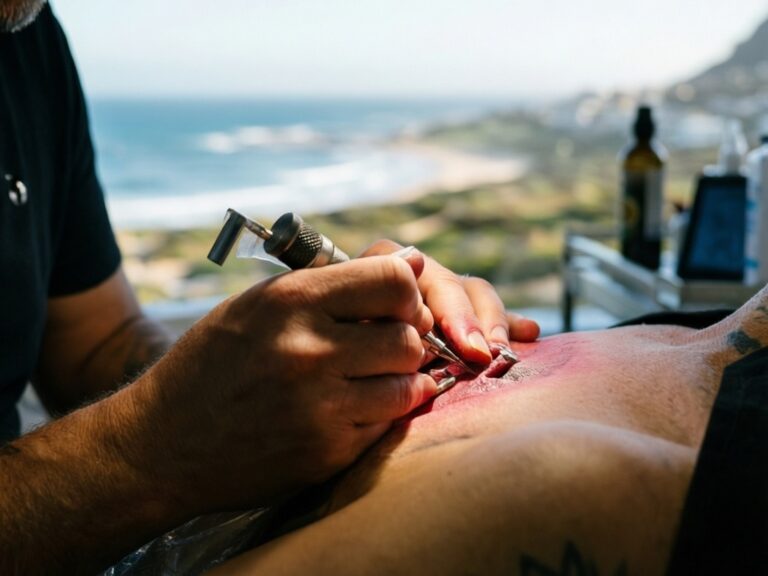
The needle stops, the machine goes quiet, and you are left with a fresh wound that looks more like a burn than a piece of art. The artist will usually finish by putting a thin layer of antibiotic ointment over the area and covering it with a bandage or some plastic wrap .
Keeping the work clean
Once you get home, the real work begins. For the first few weeks, you need to wash the area regularly using only lukewarm water and a mild antibacterial soap.
You can use a light tattoo balm to keep the skin from cracking, but stay away from anything heavy or petroleum-based. If you use products that are too thick, they will clog the pores and prevent the skin from breathing .
It is easy to think you have finished once the redness fades, but neglecting the small details of cleaning is how a good piece turns into a bad infection. Proper aftercare is much cheaper than a trip to the doctor.
For the full picture, read How to choose a tattoo studio in Cape Town West Coast.
Frequently asked questions
How can I tell if a tattoo studio in Bloubergstrand is hygienic?
Watch for the use of single-use needles and ink caps, and ensure the artist opens sterile tool packs in front of you. You should also see them change gloves if they touch non-sterile surfaces and use approved sharps containers for needle disposal.
What is the purpose of an autoclave and spore tests in a tattoo shop?
An autoclave uses high-pressure steam to kill microorganisms on metal tools. To ensure this process is working correctly, these machines must undergo regular laboratory spore tests to prove that the equipment is truly sterile and safe for use on clients.
What should I look for regarding an artist's hand hygiene?
The hands and gloves are primary ways germs move during a session. A professional artist must wash their hands for at least twenty seconds both before they begin working on your skin and after they have finished touching it to prevent cross-contamination.
How should I clean my new tattoo once I am home?
For the first few weeks, wash the area regularly using only lukewarm water and a mild antibacterial soap. You can use a light tattoo balm to prevent cracking, but avoid heavy or petroleum-based products as they can clog pores and prevent the skin from breathing.
Why is a Health Permit important for a Cape Town tattoo studio?
A valid Health Permit serves as official proof that local authorities have inspected the studio and found their hygiene standards acceptable. Without this permit, a shop is operating illegally, and failure to maintain regulations can lead to the permit being suspended or revoked.
Source: vladblad.com, flaretattoo.com, tommyssupplies.com, southernnevadahealthdistrict.org, healthline.com, hustlebutter.com