
Article re-cap
- Vehicles purchased from a dealer in Cape Town carry an implied warranty of six months under the Consumer Protection Act.
- Private vehicle sales in South Africa are typically conducted on a voetstoots basis, meaning the car is sold exactly as it stands with no built in warranty.
- A new Roadworthy Certificate must be obtained from a government registered Vehicle Testing Station during the change of ownership process.
- You have 21 days to register and license a vehicle after purchase to avoid facing penalties from the authorities.
You are standing in a driveway in Table View, looking at a car that seems solid, but the paperwork on the passenger seat is a mess of unverified promises. Buying a used vehicle in Cape Town means ensuring the legal paper trail is as sturdy as the chassis.
What changes when you buy from a dealer versus privately?
The dealer advantage
Buying from a franchised dealership provides a layer of legal armour. Under the Consumer Protection Act, any vehicle sold by a dealer carries an implied warranty of six months . If the engine or gearbox fails through no fault of your own shortly after you drive away, the law supports your claim. Dealers must also be transparent about the car's code status and the year of its first registration .
You are also entitled to a proper inspection before any money changes hands. The dealer is required by law to let you examine the vehicle and take it for a road test . This transparency reduces the risk of inheriting a mechanical disaster that was hidden behind a fresh coat of wax.
The private sale reality
Private sales operate under much harsher terms. You deal with the concept of voetstoots, which means the car is sold exactly as it stands, flaws and all. There is no built-in warranty to fall back on if a major component fails a week later. This makes verifying the vehicle's history your own responsibility, and checking the vehicle's record on the eNaTIS system before committing is one of the most effective ways to confirm ownership and outstanding finance details.
A critical part of this process is the Roadworthy Certificate (CoR). By law, you must obtain a new certificate during the change of ownership . Only government-registered Vehicle Testing Stations (VTSs) are authorised to issue these certificates . If the seller presents a certificate that is older than 60 days, it is no longer valid for the transfer .
Dealer or private: which path suits you?
Choosing between a showroom floor and a driveway depends on how much risk you can stomach. The comparison below highlights the practical differences to help you decide:
- Buying from a franchised dealership or a certified pre-owned dealer: provides a six-month warranty under the CPA, verified history, and easier paperwork handling, though you will generally pay a higher upfront price point.
- Buying private: offers the potential for a better price on the sticker, but carries a high risk of hidden mechanical or legal flaws with no CPA protections. Under voetstoots, there is no legal recourse for mechanical failures once the money has changed hands, making your pre-purchase inspection and eNaTIS history check much more critical.
Beyond the warranty question, a dealer is also obligated to disclose the year of first registration and allow a road test, whereas a private seller has no such legal obligation. If a private seller refuses either, treat it as a red flag and walk away.
How do you handle the paperwork after purchase?
The clock starts ticking the moment you take possession of the keys. You have 21 days to register and license the vehicle, or you will face penalties from the authorities .
Finalising the legalities
The process usually requires both the buyer and seller to appear at the Licensing Centre (TRA) in person, though an authorised representative can handle it if they have the right paperwork .
If the car was previously under finance, do not move a cent until you have a settlement letter from the bank confirming the loan is paid in full . You must also check that the registration papers match the physical plates on the car. Even a clean-looking vehicle can carry a hidden shadow if the documentation does not align with what is actually on the road.
What happens after the paperwork is filed?
The real barrier to a smooth deal is rarely the cost of the car itself, but the administrative friction of verifying that the person selling it actually owns what they claim to own. You must check for outstanding warrants or liens before any money changes hands.
Once the paperwork is filed, the NaTIS change of ownership is formalised at the TRA, where both the buyer and the seller, or their authorised representatives, appear in person to transfer the vehicle registration into the new owner's name . After that step is complete, your next task is maintaining the roadworthy standard through regular servicing. A car is only as good as the care you give it after the keys are in your hand. Do not let the excitement of the drive blind you to the necessity of the fine print.
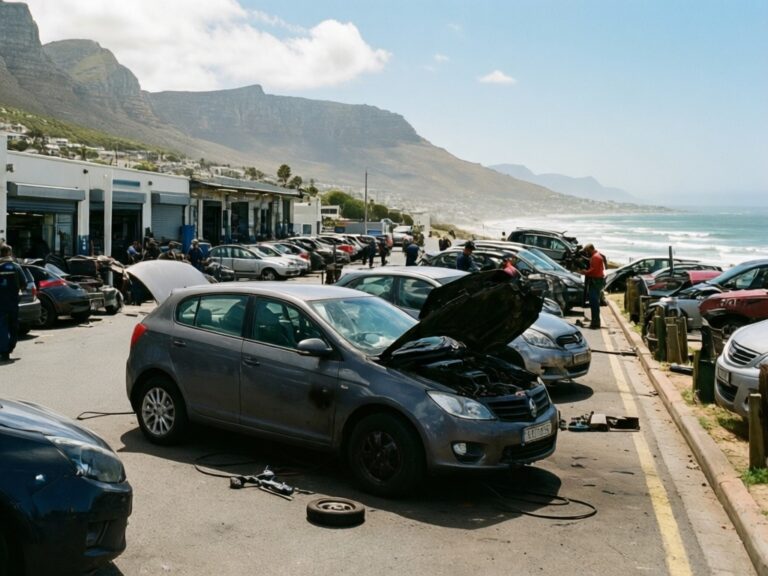
If you are looking for used vehicles in the Cape Town area, the bloubergstrand.co.za directory lists local dealers across suburbs including Table View, Parklands, Milnerton, and surrounds to help you find a reputable starting point.
Frequently asked questions
What are the benefits of buying a used car from a dealer in Table View?
Buying from a dealer, such as Thorp MG Table View or Lepel Table Bay, provides legal protection under the Consumer Protection Act. This includes an implied six month warranty on the engine and gearbox, transparency regarding registration history, and the right to conduct a road test before purchase.
What does voetstoots mean when buying a car privately in Cape Town?
Voetstoots means the vehicle is sold in its current condition, including all existing flaws. In a private sale, there is no built in warranty to rely on if mechanical components fail after the sale, making it essential to verify the vehicle history thoroughly.
How long is a Roadworthy Certificate valid for a change of ownership?
When transferring ownership, you must obtain a new certificate from an authorised Vehicle Testing Station. If a seller provides a certificate that is older than 60 days, it is no longer considered valid for the official transfer process.
What should I check if a used car was previously under finance?
Before any money changes hands, you must obtain a settlement letter from the bank. This document confirms that the previous loan has been paid in full, ensuring there are no hidden financial liabilities attached to the vehicle.
Source: car-spot.io, westerncape.gov.za, imotonews.co.za, carstand.org, autoadvice.co.za