

Article re-cap
- The all-female team named Fireline won the third annual Interledger Foundation and UCT Financial Innovation Hub Hackathon.
- Fireline developed a community-led micro-insurance model designed to provide fast cash payouts within hours of house fires in areas lacking conventional insurance.
- The hackathon featured eighty participants from six tertiary institutions, including the University of Cape Town and Cape Peninsula University of Technology.
- The competition focused on using Interledger Open Payments technology to expand access to digital financial services.
An all-female team named Fireline won the third annual Interledger Foundation and UCT Financial Innovation Hub Hackathon after developing a community-led micro-insurance model.
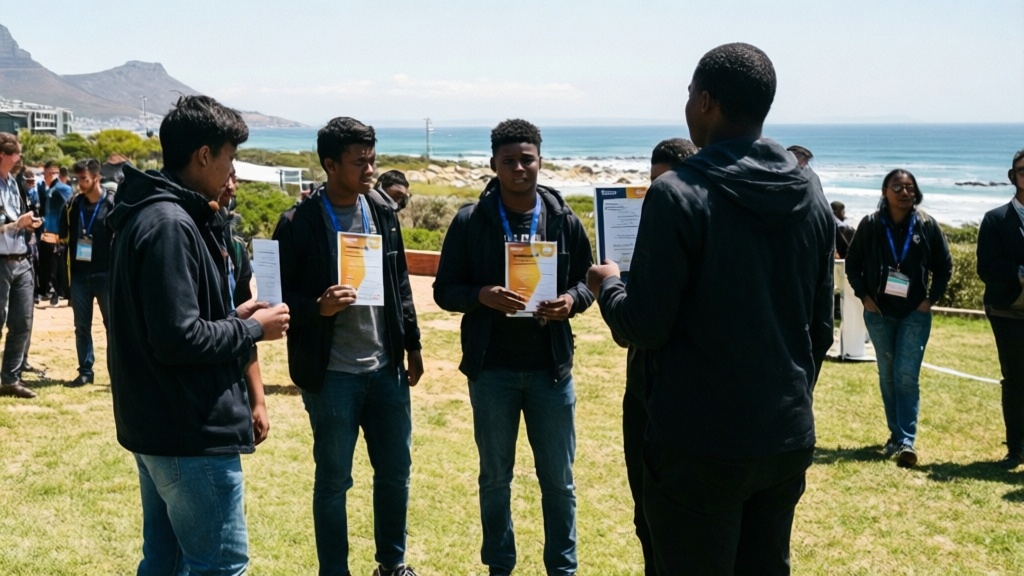
The event took place at the Hally Plattlyner School of Design Thinking Afrika and featured 80 participants from six tertiary institutions, including the University of Cape Town, Cape Peninsula University of Technology, and the University of the Western Cape. The competition focused on using Interledger Open Payments technology to expand access to digital financial services.
Fireline secured first place and R35 000 for a model providing fast cash payouts within hours of house fires in areas lacking conventional insurance. Mridula Kumar from Fireline said the project aims to make fintech more inclusive by addressing fires in informal settlements where people are often not covered by insurance.
The second place prize of R20 000 went to Bokomosa for an application that converts routine payments into automated savings to address the national retirement savings crisis. Third place was awarded to Common Cents, which received R10 000 for a platform that turns informal cash payments into verified financial records to help seasonal and rural workers access credit and insurance.
Dr Allan Davids, director of the UCT Financial Innovation Hub, said the hackathon brings together disciplines such as computer science, economics, and information systems to build financial systems that serve communities. The competition followed a week-long bootcamp where Interledger software engineers and alumni mentors provided instruction.
The programme intends to expand next year by engaging more academic institutions from across South Africa. Alex Lakatos, CTO at the Interlegre Foundation, said the partnership serves as a practical testbed to develop people and validate technology through shared values of openness and innovation.
Frequently asked questions
What did the winning team Fireline develop at the UCT hackathon?
Fireline developed a community-led micro-insurance model. This project aims to make fintech more inclusive by providing fast cash payouts within hours of house fires in informal settlements. The model specifically addresses areas where people are often not covered by conventional insurance providers.
Which teams won prizes at the Interledger Foundation and UCT hackathon?
Fireline secured first place and R35 000 for their micro-insurance model. Bokomosa won second place with R20 000 for an automated savings application. Common Cents took third place, receiving R10 000 for a platform that converts informal cash payments into verified financial records.
What was the purpose of the Interledger Foundation and UCT hackathon?
The hackathon focused on using Interledger Open Payments technology to expand access to digital financial services. It brought together disciplines such as computer science, economics, and information systems to build financial systems that serve communities through innovation and shared values of openness.
Source: itweb.co.za