Article re-cap
- Mayor Geordin Hill-Lewis says Cape Town plans to release initial designs for the Foreshore Freeway Bridge completion in September.
- The Mayor indicated funding for the project will likely come from the private sector rather than ratepayers.
- Critics including Brett Herron and the Township Economic Council (TECSA) Western Cape have raised concerns about the project's viability and spending priorities.
- Development engineer Gareth Ramsay has separately proposed converting the unfinished structure into an elevated rail corridor called the Capetrain Express.
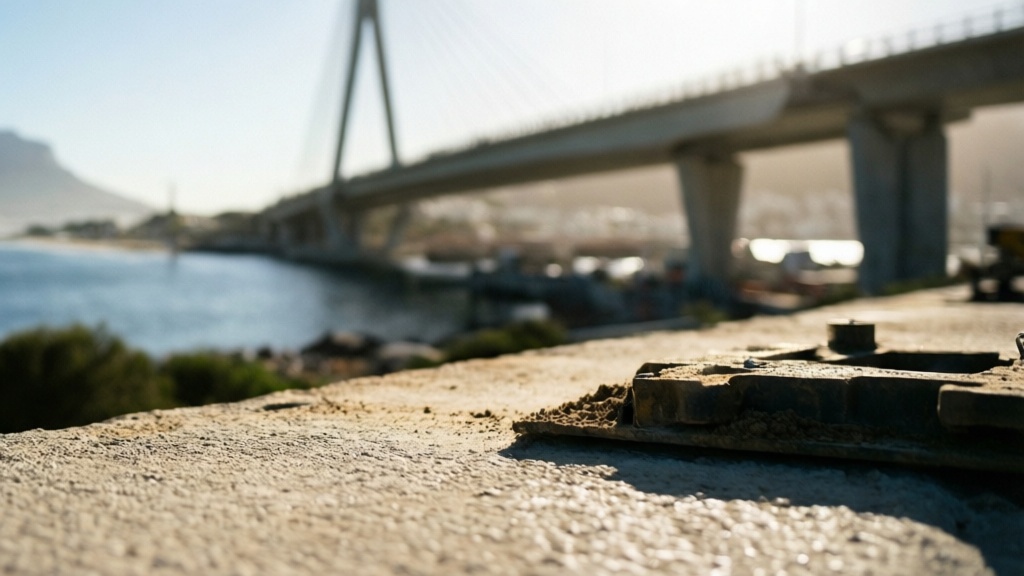
Mayor Geordin Hill-Lewis announced that the City of Cape Town is progressing towards completing the Foreshore Freeway Bridge, which has remained unfinished for decades.
The elevated section of the freeway, often referred to as the bridge to nowhere, is well on its way to being finished, according to Mayor Hill-Lewis during a recent appearance on Kfm Mornings.
The City intends to release initial designs for public comment in September. However, the Mayor noted that construction has not yet started because the project requires significant funding for the expensive operation.
The Mayor indicated that funding for the project will likely be sourced from the private sector, rather than from ratepayers directly.
The bridge was originally built in the early 1970s as part of a traffic easing plan, but construction ceased in 1977 due to a lack of funds.
Completion is necessary because the intersection where the elevated freeway descends into the city is the busiest intersection in Cape Town, according to the Mayor.
However, the announcement has drawn criticism from GOOD secretary-general Brett Herron, a former City Mayoral Committee Member for Transport. Herron argues that the DA derailed a viable earlier solution, the Foreshore Freeway Project, which sought private-sector proposals to complete the bridges while delivering affordable housing on roughly eight hectares of City-owned land beneath the structure. He said engineers at the time estimated completion at R2 billion, a cost he said ratepayers could never absorb, which was why the City had instead sought private developers to fund the transport infrastructure and affordable housing in exchange for access to the land. Herron alleged the project was ultimately blocked by DA politicians and that the City Manager cancelled the original tender under political pressure after one consortium had successfully progressed through the bid process.
The Township Economic Council (TECSA) Western Cape, referred to in some reports as the township development council, has also weighed in, with chairperson Ndodana Hadebe arguing that completing the bridge will not resolve traffic problems but create further dead-end bottlenecks while the rail network remains paralysed. "Pouring capital into private car infrastructure while the rail network lies paralyzed and public transport is underfunded is an insult to the working class," Hadebe said, calling for an immediate halt to the planning until an equitable economic impact assessment for the entire metro is made public.
Herron also claimed that some of the land identified under the original Foreshore Freeway Project proposal may no longer be available. He alleged he was later asked to depose an affidavit relating to what he described as political interference in the cancellation of the original tender.
Development engineer Gareth Ramsay, who has proposed using the unfinished freeway structure as the basis for an elevated rail project he calls the Capetrain Express, said the Mayor was aware of that proposal and that the City's new road-completion plans would not be feasible. The Cape Town Collective Ratepayers' Association (CTCRA) took a more measured stance, saying traffic congestion is a genuine problem requiring a solution but that, without designs or a cost estimate, it was difficult to offer meaningful comment at this point.
Ramsay's CapetrainExpress proposal envisions converting the existing concrete freeway structures into an elevated heavy rail corridor. The proposal identifies the vertical support infrastructure as sunk capital that rational planning should evaluate for adaptive reuse, subject to geotechnical assessment to determine precise retrofitting requirements. Separately, the new source also offers a more specific account of why construction originally halted, stating that officials could not resolve fundamental questions about where the highway should terminate and how it would integrate with existing street networks, uncertainty that the source links to broader ambivalence about urban spatial organisation during that period.
Herron is sceptical the current plan will proceed. "The Mayor's project will never be funded and will never happen, the ratepayers simply cannot afford to fund it," he said. In a 2022 parliamentary reply, then Transport Minister Fikile Mbalula indicated completing the freeway could cost around R1.8 billion and take approximately nine years, with funding identified as a key obstacle. The Mayor said more detail on cost, the funding model and the timeline would be shared once the public participation process concludes.
Frequently asked questions
When will Cape Town release designs for the Foreshore Freeway Bridge completion?
The City of Cape Town plans to release initial designs for public comment in September.
Who will fund the completion of the Foreshore Freeway Bridge?
Mayor Hill-Lewis has indicated that funding will likely be sourced from the private sector rather than from ratepayers directly, though further detail is expected after the public participation process.
Why was construction of the Foreshore Freeway Bridge originally halted?
Construction began in the early 1970s and ceased in 1977 due to a lack of funds, with officials also unable to resolve fundamental questions about where the highway should terminate and how it would integrate with existing street networks.
What is the Township Economic Council's position on the project?
Chairperson Ndodana Hadebe argues that completing the bridge will not resolve traffic problems, that the money could be better spent on service delivery, and has called for an equitable economic impact assessment for the entire metro before planning continues.
Source: ewn.co.za, iol.co.za, weekendargus.co.za, dailyvoice.co.za, capetown.today, getaway.co.za, capetownetc.com