Article re-cap
- A handyman can legally handle surface maintenance tasks such as painting rooms, fixing loose fence slats, or replacing door handles.
- Any electrical work connecting to your main supply must be performed by a registered electrician with at least an NQF level 3 qualification.
- Plumbing work that requires a compliance certificate must be signed off by a registered master plumber rather than a general handyman.
- It is a criminal offence for a home building business to operate without NHBRC registration, which can lead to fines or prison for the contractor.
- Building an extension as an owner builder in areas like Bloubergstrand means you lose all five year warranty protection.
You spot a leaking tap in your Milnerton home and think: quick fix, small cost. But hire the wrong person or tackle the wrong job yourself, and you are not just fixing a drip. You are breaking the law.
What a handyman can legally handle
A handyman is for the surface stuff. Painting a room, fixing a loose fence slat, or replacing a worn door handle is fine. These are the small things that keep a house looking tidy without needing to call in the heavy machinery.
You can regmaak a scuffed wall or tighten a cabinet hinge yourself, or hire someone to do it, and nobody is going to come knocking on your door with a summons. There is no need for certificates of compliance when you are just refreshing the colour of a bedroom or fixing a gate latch.
The trouble starts when the work moves from the surface into the structure. If you start pulling up floorboards to change pipes or opening up walls to move wires, you have left the easy zone behind. Once you touch the bones of the house, you are no longer just doing maintenance; you are entering a space where the law expects certain papers to be in order.
Where the line gets crossed: utilities and compliance
The danger in the wires
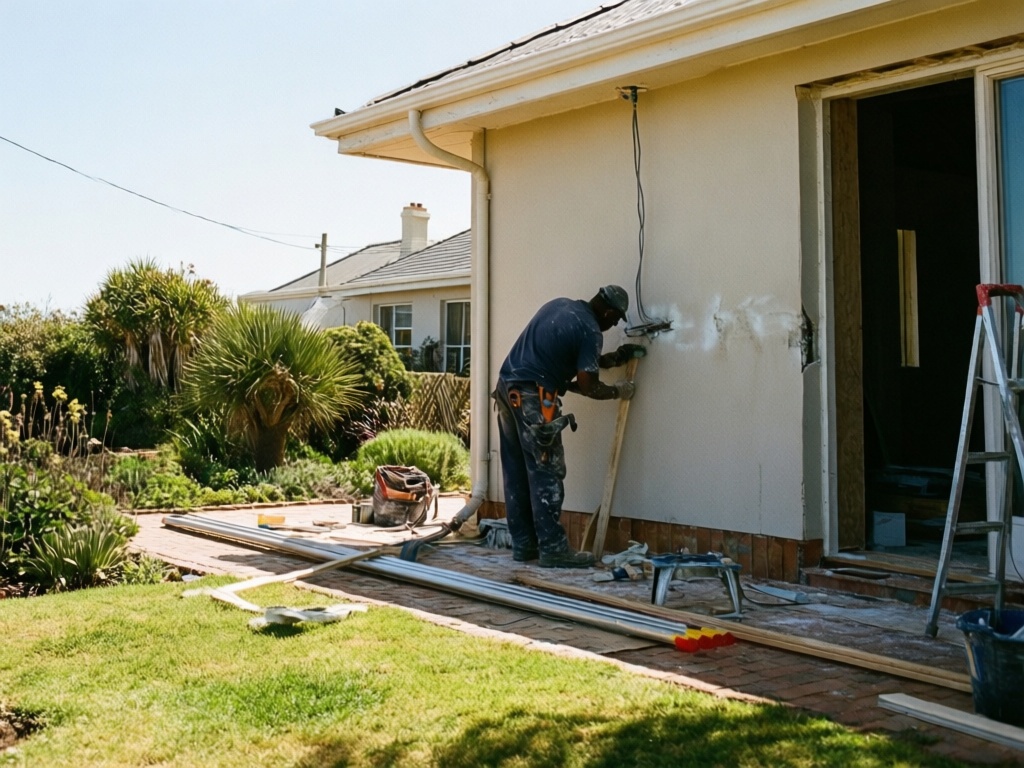
A new plug socket or a solar setup looks like an easy weekend project until you try to claim for damages. Anything that connects directly to your main supply must be handled by a registered electrician . To even register as a contractor with the Department of Labour, that person needs at least an NQF level 3 qualification and a passed trade test .
If you skip the professional, you might save some cash upfront, but you lose the Certificate of Compliance (CoC). Without that CoC supplement for your new wiring or solar installation, your insurance company will likely walk away when a fire starts .
The plumbing trap
You can regmaak a small leak yourself if you have the patience and the right spanner. However, once the work involves anything that requires a compliance certificate, you cannot rely on a general handyman. That paperwork must be signed off by a registered master plumber only .
The criminal side: building and extensions
Then there is the heavy stuff. If you are planning to add a room or build an extension in Table View or Bloubergstrand, you cannot simply hire anyone with a truck and a trowel.
Section 10 of the Act makes it a criminal offence to carry on a home building business without NHBRC registration . It is not just about a fine for the builder. If your contractor is not registered, they can face a R25k fine or even a year in prison, and more importantly for you, they cannot legally claim payment for any work they have finished .
You might find an owner-builder willing to maak 'n plan and skip the paperwork. While you can build your own home for personal use, doing so means you lose that five-year warranty protection entirely . You are left standing alone if the foundations start to shift.
When moving into structural territory, you need contractors who carry the weight of proper registration. Always verify that any builder you approach for new builds or major renovations holds current NHBRC registration before signing anything or breaking ground. The directory on this site lists a range of registered contractors across the northern suburbs who can assist with work at this scale.
How to find the right professional for the job
Matching the scale of your project to the right person is about knowing where the surface ends and the structure begins. For small, everyday maintenance that keeps a house running, a handyman can handle the basics like painting a room, fixing a fence, or replacing a door handle without any legal fuss. Some handyman services also provide CoCs for certain work when the scope requires it, so it is worth asking upfront what certifications a contractor holds before the job begins.
Be careful not to let a small repair quietly grow into something that needs a specialist. If you are touching anything that connects to your main electrical supply, the work must be done by a qualified, registered electrician. For plumbing that requires a compliance certificate, the sign-off must come from a registered master plumber, not simply a man with a spanner .
When the job moves beyond what a toolkit can fix and into the realm of adding rooms or building extensions, match the scale of the work to the tier of contractor it demands. For cosmetic and general maintenance tasks, a capable handyman or small renovations firm is the appropriate choice. For mid-scale renovations involving kitchens, bathrooms, or finishes, look for a renovations contractor with a track record in your suburb. For structural work, new builds, or significant extensions, you must engage an NHBRC-registered builder. Checking that registration before the first brick is laid is not optional; it is the difference between a completed project and a legal liability. The contractor directory on this site covers all three tiers across suburbs including Table View, Bloubergstrand, Parklands, and Milnerton, giving you a starting point for comparing firms at the right level for your job.
Some people try to maak 'n plan by acting as an owner-builder to save on costs. That route is legal, but it comes with a significant trade-off: you lose the protection of the five-year warranty entirely . A cheap repair that ends up costing you a house is no bargain at all, so weigh the short-term saving against what you stand to lose before making that call.
The real cost of cutting corners
The real cost of cutting corners is rarely felt while the paint is still wet. You feel it much later, when you sit around a dining table with a buyer's lawyer and realise your extension has no paper trail to back it up. A house is more than just bricks and mortar; it is a collection of legal permissions that must be passed on to the next owner.
When you try to sell, the inspector will look for the certificates that prove the work was done by the right hands. If you cannot produce a Certificate of Compliance for the electrical work or the plumbing, you are not just looking at a delay. You are looking at a massive, unexpected bill to fix or certify everything that was done without the proper oversight.
It is easy to get caught up in the moment and think you are being clever by avoiding the official route. But the paperwork is what gives the building its value. Without it, you have simply built a very expensive problem for your future self.
Frequently asked questions
What kind of home repairs can a handyman legally do?
A handyman is suitable for surface level maintenance and small tasks. This includes painting rooms, fixing a gate latch, tightening cabinet hinges, or replacing worn door handles. These jobs do not require certificates of compliance and do not involve the structural bones of your house.
Can I hire a handyman to install new electrical sockets or solar panels?
No, you should not hire a general handyman for electrical work connected to your main supply. This requires a registered electrician with an NQF level 3 qualification. Without a professional, you will not receive the necessary Certificate of Compliance, which could lead to insurance companies rejecting fire claims.
What are the risks of using an unregistered builder for home extensions in Table View?
Using an unregistered builder is risky because Section 10 of the Act makes it a criminal offence to run a building business without NHBRC registration. Unregistered contractors can face heavy fines or prison, and they cannot legally claim payment for work finished. You also risk losing essential legal paperwork.
Is it worth acting as an owner builder to save money on construction?
While you can build a home for personal use, acting as an owner builder means you lose the five year warranty protection entirely. If foundations shift or structural issues arise in your Bloubergstrand or Table View property, you will be left without legal recourse or professional protection.
Source: govchain.co.za, louwcoet.co.za, electrical-compliance-certificate.co.za, electriciandurban.com, sapac.co.za, sans10400.co.za, fonster.co.za