
Article re-cap
- Small group sizes of no more than eight learners allow teachers to spot and respond to individual difficulty.
- A 70/30 split between academic work and skills development supports the whole child.
- Centres that coordinate with therapists and understand WCED exam concession requirements give families the best chance of consistent support.
Why the right centre matters for struggling learners
You sit at the kitchen table late at night, looking at that school report, and your heart just sinks a little bit. It is not just about the marks on the page, but the way your child looks at you when you ask about their maths test, like they are carrying a heavy stone in their pocket. For many of our children, especially those with learning difficulties or disabilities, the mainstream classroom can feel like a place where they are always running a race with weights tied to their ankles, making it so difficult for them to be accepted or even understood. When you start looking for a centre, you are not just looking for a classroom; you are looking for a sanctuary where the teaching fits the child, not the other way around.
What class size and teaching balance tell you about a centre
The importance of space and numbers
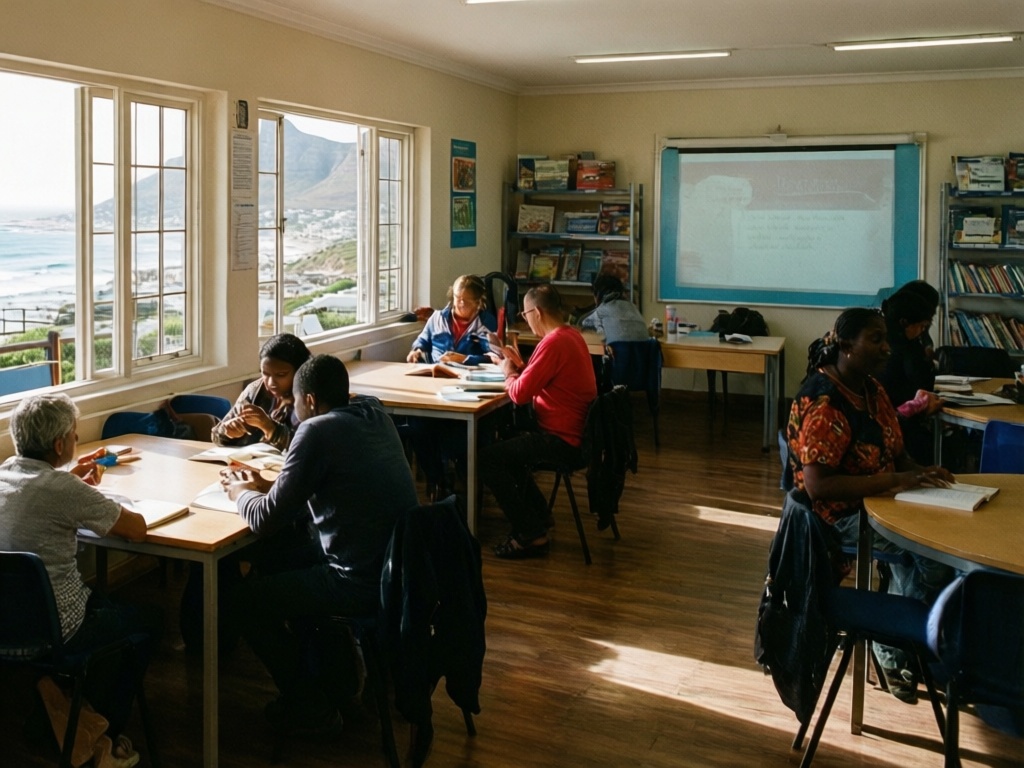
When you step into a centre in places like Table View or Bloubergstrand, do not just look at the books on the desks. Look at how much room there is for a child to breathe and be seen. You want to avoid those crowded rooms where the noise of many voices makes it hard for a quiet child to think. A proper setting should keep the groups small, ideally with no more than eight learners to one tutor. This way, the teacher can notice if a child is struggling with a sum or just feeling a bit lost in the back row.
Finding a balance between books and heart
It is also worth watching how they spend their time during a lesson. If a place only focuses on drilling maths or language until the child is exhausted, they might miss the bigger picture of growth. A good approach often finds a middle ground, perhaps with seventy percent of the work focused on school academics and thirty percent dedicated to building core skills or emotional development. You want a place that understands that a child needs more than just correct answers; they need the confidence to keep trying when the work gets hard.
How specialist coordination makes the difference
The strength of a connected team
A child does not exist in a vacuum, and their learning should not either. The best centres do not try to be islands; instead, they act like a bridge that links up with the specialists who already know your child's needs. You might find a place that has educational therapists, psychologists, or even social workers working right there on the premises {{cite:4, 6}}. This kind of closeness makes it much easier for everyone to stay on the same page.
It is vital that the centre can liaise directly with your child's private therapists to ensure the lessons match the clinical support they are receiving elsewhere. When the tutor and the therapist are speaking the same language, the child feels a sense of consistency that settles the mind. Without this coordination, you might find yourself repeating the same instructions to three different people, which is a heavy burden for any parent.
I often see parents feeling quite lost in the middle of all the official paperwork, especially when it comes to applying for exam concessions like extra time through the school or the WCED. To get these accommodations, you must have the proper reports from an educational assessment to prove why your child needs that extra space and time. A good centre understands how to work with these formal documents and can help you navigate the requirements so that nothing is missed when the exam season arrives.
Different approaches: computerised learning versus traditional tutoring
Every child has a different way of finding their footing, and what works for one learner might not work for another. Some children find their confidence through the steady glow of a screen, where they can move at their own pace without feeling watched by others. You see this in places like Master Maths Blouberg, where they use interactive computerised lessons alongside trained tutors to help make maths feel less like an enemy and more like a puzzle to be solved.
There is a certain comfort in that structure, a way to practice without the fear of making a mistake in front of a crowd. But then you have the children who need the warmth of a human connection, someone sitting right there to catch their eye when they struggle with a difficult sum. For these learners, the traditional approach of How to find a tutor in Table View and Bloubergstrand might be the better path, providing that one-on-one presence that helps them feel seen.
Choosing between these methods is not about finding the most modern way or the most old-fashioned one. It is about weighing the benefit of a multi-disciplinary centre against the cost and the extra travel it might mean for your family. You must look at what your child needs in their quiet moments and what they need when the work gets hard, finding the rhythm that lets them breathe.
Take time to find the right fit
As you begin this search, take your time. Do not rush into the first door that opens just because the paperwork seems easy or the location is convenient.
Look at the faces of the children in those rooms; are they truly engaged, or are they just sitting there, waiting for the clock to run out? The goal is a foundation strong enough to carry them into secondary school and beyond. We must make sure the foundation is strong enough to hold them.
Frequently asked questions
What is a reasonable group size at a learning centre?
A well-run centre keeps groups small. No more than eight learners per group is a widely recommended guideline, as it allows the teacher to notice when an individual child is struggling and respond before the difficulty compounds.
How much time should a centre spend on academic work versus other skills?
A balanced approach dedicates roughly seventy percent of session time to school academic work and thirty percent to building foundational or personal development skills. This ratio supports both curriculum progress and the confidence a child needs to keep trying.
Can a learning centre help me apply for WCED exam concessions such as extra time?
A good centre should understand the WCED exam concession process and be able to guide you through the paperwork. Concessions such as extra time require a formal educational assessment report, and the centre should know how to work with those documents alongside the school.
Should I choose a computerised or a traditional tutoring approach?
This depends on the individual child. Some learners thrive with the self-paced structure of computerised lessons, while others need the immediate human connection of a tutor sitting alongside them. Many centres in areas such as Table View and Bloubergstrand offer a blend of both.
Why does it matter whether a centre coordinates with my child's therapists?
When the centre communicates with your child's educational therapist, psychologist, or other specialists, the strategies used in sessions stay consistent with the clinical support your child receives elsewhere. This consistency reduces confusion for the child and lightens the administrative burden on parents.
Source: expatcapetown.com, eduexcellence.co.za, collegereporters.com, tlcremedialschool.co.za, daynewilliams.co.za, mastermaths.co.za