
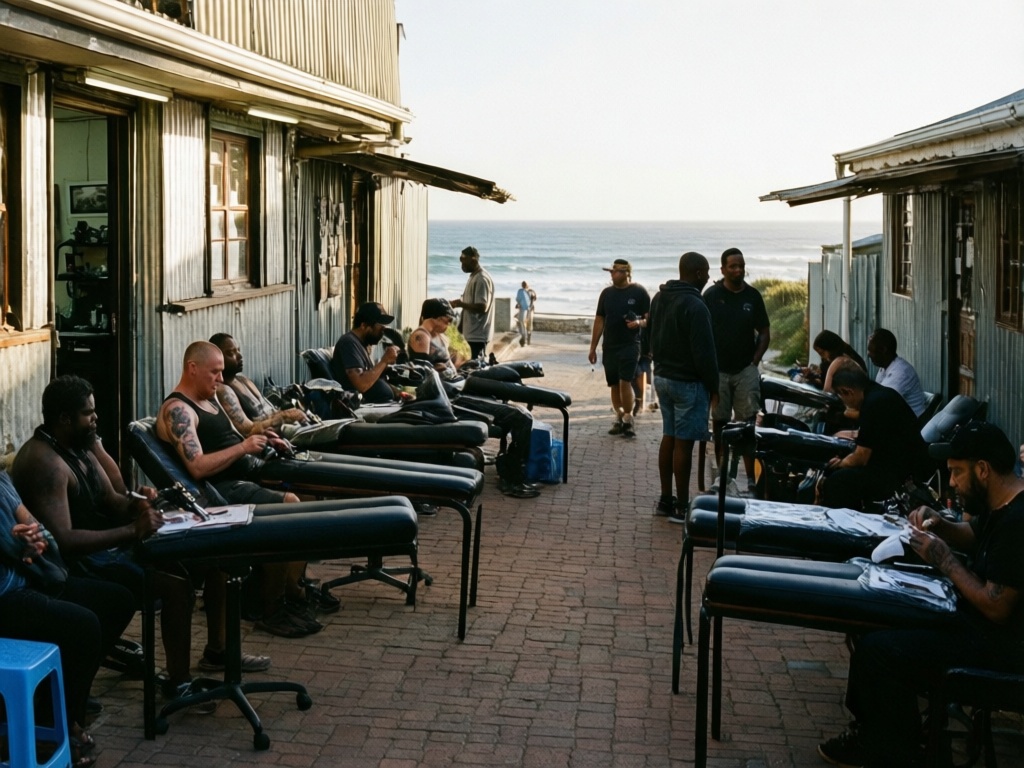
Finding the right artist is about more than just aesthetics. This guide helps residents across Blouberg, Table View and Melkbosstrand work through the practicalities of hygiene, local regulations, and portfolio reviews to ensure a safe and well-informed body art experience. Studios operating in these areas fall under City of Cape Town municipal licensing, and the City of Cape Town Environmental Health directorate is the relevant authority overseeing compliance.
Is the artist's portfolio aligned with your aesthetic vision?
Finding a tattoo artist is essentially about matching your personal aesthetic with their established visual language. You should treat the search like putting together a mood board for a new design project. Look closely at the consistency of their work to see if they can maintain a specific style across different skin types and placements.
A great portfolio gives you a clear picture of technical skill and artistic vision. You want to look beyond just the finished image and examine the fine details, such as line weight, shading transitions, and colour saturation. If you are looking for something hyper-realistic, check whether their depth perception and texture work hold up well across different placements.
It is also vital to ensure that the artist's current output aligns with your specific concept. Some artists may have incredible blackwork in their archives but have recently shifted their focus toward fine line or colourful illustrative styles. Browsing through their most recent social media uploads or website galleries provides the most accurate look at their current technical capabilities and stylistic direction.
Think about how the composition will interact with your body's natural flow and movement. A well-designed piece should feel like an integrated part of your anatomy rather than a sticker placed on top of it. When you find an artist whose portfolio closely matches what you have in mind, you have found the foundation for a lasting piece of art.
What hygiene and sterilisation standards should you look for?
While the aesthetic of your tattoo is what draws you in, the hygiene and sterilisation standards are what keep the experience safe. A professional environment must prioritise infection control to prevent complications during or after the procedure.
When you enter a studio, look for an environment that follows strict skin penetration premises regulations. The workspace should be meticulously organised and appear clinically clean, with all surfaces being non-porous and easy to disinfect. You want to see that the artist uses single-use, sterile needles and that every piece of equipment is handled with extreme care to maintain a sterile field.
Pay close attention to the sterilisation process for any reusable tools. A reputable studio will utilise an autoclave, which is a machine designed to kill all microbial life through high pressure and heat. You should feel confident that the artist follows rigorous hygiene rules regarding cross contamination, such as wearing fresh gloves for every client and using disposable barriers on all contact points.
The presence of an environmental health certificate or visible proof of recent health inspections can provide extra reassurance. This level of transparency shows that the studio is compliant with local health and trade licensing requirements under the Businesses Act. A studio that treats hygiene as a non-negotiable core requirement is one you can trust.
Does the studio comply with local health and trade regulations?
Beyond the immediate visual of cleanliness, you should verify that the studio operates within the legal framework required by local authorities. Studios in Blouberg, Table View and Melkbosstrand fall under City of Cape Town municipal licensing, and the City of Cape Town Environmental Health directorate carries out inspections and enforces compliance. A professional establishment must hold a valid business licence and a health licence as mandated under the Businesses Act. These permits are not just administrative formalities, they are essential indicators that the studio has met the necessary safety and operational benchmarks set by the municipality.
The regulatory requirements for skin penetration premises are quite specific, so you should look for signs of official compliance. This includes adhering to strict health and trade licensing requirements which ensure the facility is fit for purpose. If a studio has not completed its licensing or fails to maintain its environmental health certificate, it introduces unnecessary risks into your tattooing experience.
Legal compliance also extends to how the artist handles age-related procedures. In South Africa, there are very clear laws regarding tattooing or piercing minors, specifically concerning age of consent and parental consent rules. A reputable studio will have a clear, consistent process for verifying identity and ensuring all legal documentation is in place before any work begins.
Checking for these regulatory markers allows you to trust the way the studio is run as much as the talent of the artist.
Are there legal considerations regarding age and consent?
The legalities of age and consent are a critical part of the tattooing process, ensuring that every procedure is ethically and legally sound. In South Africa, the laws surrounding tattooing or piercing minors are very specific, particularly regarding the age of consent and the necessity of parental consent rules. You should expect any professional studio to have a solid system for verifying identity to prevent legal complications.
If you are under the legal age of consent, the process requires much more than just showing up with a friend. A legitimate artist will require documented proof of your age and formal, written permission from a parent or legal guardian. This documentation is a non-negotiable requirement, ensuring that the studio remains compliant with local regulations and protects both the client and the business.
This level of administrative care is actually a sign of a well-organised and professional studio. A studio that skips these verification steps is not just being relaxed, they are operating outside of the legal framework. You want to see an artist who treats identity verification as a standard part of their intake process.
Always ensure that all parties involved understand the requirements before booking your session to avoid unnecessary delays on the day. Having your identification and any required parental paperwork ready prevents hold-ups and keeps the appointment on track.
How do you manage your tattoo aftercare for optimal healing?
Managing your tattoo aftercare is about more than just following basic instructions. It is about protecting the integrity of the design as your skin recovers. Tattooing breaks the skin surface and the body needs specific conditions to repair itself properly, which is why attentive cleaning and hydration matter. A consistent approach ensures that the pigment stays vibrant and the skin barrier repairs itself without unnecessary interference.
The first few days are critical for maintaining hygiene and preventing infection. You should wash the area gently with fragrance-free, mild soap using clean hands to remove any excess ink or plasma. Avoid scrubbing or using harsh chemicals that could disrupt the healing surface, as this can lead to scabbing or loss of detail. Keeping the area clean is the foundation of a successful recovery period.
Hydration plays a massive role in how the tattoo settles into your skin. Once the initial cleaning routine is established, applying a thin layer of recommended ointment or unscented lotion helps keep the skin supple. You want to avoid over-saturating the tattoo with too much product, as trapped moisture can sometimes cause issues. The goal is a light, breathable layer that supports the skin without suffocating it.
You also need to be mindful of external factors that could compromise your results. Avoid soaking your tattoo in pools, oceans, or hot baths during the early stages of healing, as these environments introduce bacteria and can soften the scabs prematurely. Similarly, protecting the fresh ink from direct sunlight is essential to prevent fading. Following a steady aftercare routine gives your new body art the best chance of healing well and holding its detail over time.
Conclusion
Navigating the world of body art requires a balance of legal awareness, hygiene standards, and dedicated aftercare. Success in this process depends on verifying age requirements through proper documentation and following strict sanitisation protocols to ensure a safe environment. By prioritising professional studio standards, checking that your chosen studio holds the correct licences under City of Cape Town municipal requirements, and maintaining a consistent healing routine, you protect both your health and the long-term aesthetic quality of your tattoo. When you approach each step with this level of care, the final result is a piece of body art you can enjoy with confidence for years to come.