
Article re-cap
- Three contamination events at Koeberg in late June and early July 2024 were each classified as Level 0 on the International Nuclear and Radiological Event Scale, meaning no safety significance beyond the plant boundary.
- Sixty-five workers screened after the incidents received committed effective doses of between 0.002 and 0.009 millisievert, a fraction of the 20 millisievert statutory annual limit.
- Environmental monitors across the Koeberg Nature Reserve and surrounding area showed no off-site contamination in the fortnight following the incidents.
- Unit 2 had just completed 365 consecutive days of uninterrupted service at 970 MW, delivering approximately 8.3 TWh and offsetting an estimated 7.5 million tonnes of carbon dioxide compared with an equivalent coal fleet.
- Koeberg remains Africa's only commercial nuclear power station and is expected to continue generating electricity into the 2040s.
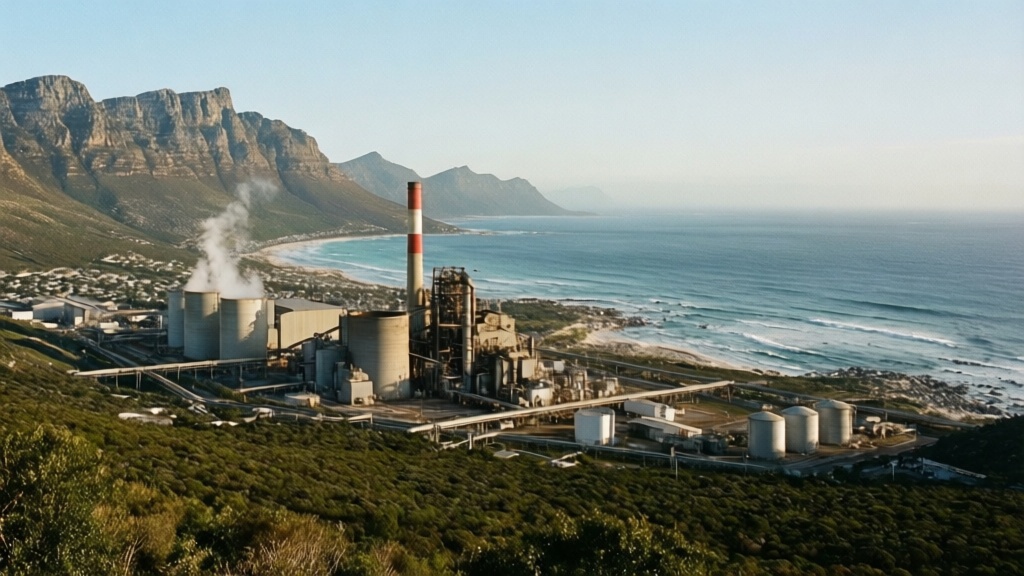
South Africa's nuclear watchdog has confirmed that three recent contamination events at the Koeberg Nuclear Power Station were contained within the plant and posed no danger to nearby communities.
The National Nuclear Regulator (NNR) stated that the incidents occurred on 30 June, 2 July, and 7 July during scheduled maintenance at the station, which is located approximately 40 kilometres north of Cape Town.
A temporary loss of power to ventilation systems caused elevated airborne radioactive contamination inside controlled sections of the station, according to the NNR. The regulator explained that the contamination remained confined within secure containment areas and did not qualify as a nuclear or radiological emergency.
The NNR reported that recorded levels of radioactive contamination were extremely low, falling below the level of radiation exposure typically associated with a dental X-ray. Employees who entered affected areas underwent routine radiation screening following the incidents.
The NNR classified each incident as Level 0 on the International Nuclear and Radiological Event Scale, meaning no safety significance beyond the plant boundary. Sixty-five personnel, comprising 53 contractors and 12 Eskom staff, who were present in the controlled area underwent whole-body counting the same afternoon. Committed effective doses ranged from 0.002 to 0.009 millisievert, well below the statutory annual limit of 20 millisievert for nuclear employees.
Eskom acknowledged that minor airborne radioactivity was detected during routine testing inside the plant's steel-reinforced containment building. The utility stated that this area is a tightly controlled radiological zone where components naturally become radioactive as part of the nuclear fuel cycle.
According to Eskom, work was immediately halted and radiation protection teams assessed conditions when elevated readings were detected. Both the NNR and Eskom insisted there was no release of radioactive material into the environment, the ocean, or the atmosphere outside the plant.
Environmental monitors across the Koeberg Nature Reserve, including gamma probes, tritium samplers and iodine cartridges within a ten-kilometre radius of the plant, returned no isotope-specific spikes in the fortnight following the incidents. Sea-water, fynbos, milk and fish samples collected during this period showed no anomalies.
The incidents occurred shortly after Unit 2 completed 365 consecutive days of uninterrupted service, supplying 970 MW to the national grid. That 365-day run delivered approximately 8.3 TWh to the grid, which Eskom estimates offset roughly 7.5 million tonnes of carbon dioxide compared with an equivalent coal fleet. Koeberg remains Africa's only commercial nuclear power station and is expected to continue generating electricity into the 2040s.
Frequently asked questions
What happened at Koeberg Nuclear Power Station in late June and early July?
Three contamination events occurred during scheduled maintenance on 30 June, 2 July, and 7 July. A temporary loss of power to ventilation systems caused elevated airborne radioactive contamination inside controlled sections of the station, but it remained confined within secure containment areas.
Does this pose a risk to people living near Koeberg on the Western Seaboard?
No. The National Nuclear Regulator confirmed that all three incidents posed no danger to nearby communities. No radioactive material was released into the environment, ocean, or atmosphere outside the plant, and contamination levels were extremely low, below typical dental X-ray exposure.
How does Koeberg contribute to South Africa's power supply?
Koeberg is Africa's only commercial nuclear power station. Unit 2 recently completed 365 consecutive days of uninterrupted service, supplying approximately 946 megawatts to the national grid. The station is expected to continue generating electricity into the 2040s.
What safety measures were taken after the contamination was detected?
Work was immediately halted when elevated readings were detected. Radiation protection teams assessed conditions, and employees who entered affected areas underwent routine radiation screening following the incidents.
Source: capetownetc.com, capetown.today